The For You series
Memory and ageingWhen memory starts to fade
A warm, plain guide to memory change: how some forgetfulness can be normal, when it is a health condition of the brain, the causes a doctor can treat, what really helps, and how to care for an older relative and for yourself.
Forgetting is not always failing
Some forgetfulness is a normal part of getting older, and everyone forgets things from time to time. When memory loss is more than that, it is a health condition affecting the brain. It is not simply old age, and it is not madness. Knowing the difference is the first calm step.
You may have caught yourself walking into a room and forgetting why. Or losing a name that used to come easily. It can be frightening. Quiet voices may whisper that this is the beginning of the end, or that something is shamefully wrong with you. Most of the time, that fear is heavier than the facts.
Some slowing of memory is an ordinary part of ageing, the way grey hair and stiffer knees are. Most people forget things sometimes, and that alone is not a disease. When memory loss goes further, when it starts to disturb everyday life, it points to a health condition of the brain, the same way chest pain points to the heart. Memory loss that is more than ordinary forgetting is a health condition of the brain, not old age and not madness.
More, if you want it
The word people fear is dementia, and the fear often does more harm than the word deserves. Dementia is not a normal, unavoidable part of growing old, even though age is the biggest single thing that raises the chance of it. It is caused by diseases and injuries that affect the brain, and it is one possible reason for memory loss among several. Naming it plainly, as a health condition rather than a curse or a character flaw, takes away some of its power to frighten and makes it easier to get the right help.
Try saying this once, plainly: forgetting a name now and then is human, and if my memory is changing in a way that worries me, that is a health question to ask, not a secret to hide. Notice how that feels different from quietly bracing for the worst.
The signs worth noticing
Some changes are worth paying attention to: forgetting recent events, repeating the same question, losing things often, getting lost in familiar places, losing track of the day or date, struggling to find words or do familiar tasks, and shifts in mood or behaviour that can show up even before the memory changes do.
There is a difference between forgetting where you left the keys and forgetting what the keys are for. The first is everyday. The second is the kind of change worth bringing to a doctor. The signs that memory change may be more than ordinary ageing tend to gather quietly, a few at a time.
A common one is forgetting things that happened recently, while older memories stay clear. Another is asking the same question again and again, or losing things often. Getting confused or lost in familiar places is one more. So is losing track of time, the day, or the date. Words can become hard to find. Once-easy tasks, like cooking a regular meal or handling money, can suddenly feel difficult. The change worth noticing is when memory starts to get in the way of ordinary daily life.
- Recent things slip away, while older memories stay clear.
- The same question, or the same story, comes around again.
- Familiar places start to feel confusing, and time gets hard to track.
- Words, names, and once-easy tasks become a struggle.
More, if you want it
One thing that surprises many families is that the first change is not always about memory at all. Mood and behaviour can shift first, a person becoming more withdrawn, more anxious, more easily upset, or less interested in things they loved, sometimes before the forgetting is obvious. That is part of the picture too, not a separate failing. None of these signs, on its own, proves anything. It is the pattern, gently building over weeks and months, that is worth writing down and taking to a doctor.
Many causes, and some can be treated
Memory problems have many causes, and this matters, because some of them can be treated or even reversed. Poor sleep, stress, low mood, an underactive thyroid, low vitamin levels, certain medicines, and infections can all blur the memory. Dementia is only one possible cause. A doctor can find out which one it is.
Here is the part the fear tends to skip over: not every memory problem is dementia, and some causes can be put right. The brain is sensitive, and many ordinary, treatable things can fog it. That is exactly why guessing at home is the wrong move, and a proper check-up is the right one.
Poor sleep, heavy stress, anxiety, and low mood can all dull memory. They lift when they are treated. So can an underactive thyroid, low levels of vitamins like B12, and the side effects of certain medicines. Infections matter too. In older people, an infection can cause sudden confusion that clears once it is treated. Dementia is one cause among these, not the only one. Some causes of memory loss can be treated or reversed. That is the best reason to get it checked rather than guess.
Before any doctor's visit, jot down two short lists: the medicines and supplements being taken, and the changes that have been noticed, with a rough sense of when they began. A doctor can do far more with "she has been more forgetful and low for about four months, since the new tablet" than with "her memory is bad."
A lot can be done
There is no cure for dementia, but that is not the same as nothing can be done. A great deal helps: treating the reversible causes first, simple routines and memory aids, staying active and connected, real support for the family, and, when a doctor judges it useful, tablets that can ease some symptoms.
When people hear there is no cure, they sometimes hear there is no hope, and the two are not the same thing. Even when a cause cannot be reversed, much can be done to help a person live well, hold on to what they can do, and feel steadier day to day. The first move is always the check-up, so that anything treatable is treated.
After that, the help is practical and surprisingly ordinary. Simple routines cut down the daily confusion. A fixed place for keys and glasses helps. So do a clear calendar, written reminders, and a calm, familiar home. Staying active, connected, and gently occupied is good for the brain and the mood both. Looking after general health matters too: blood pressure, hearing, and vision more than people expect. No cure is not the same as no help. A great deal can be done to live well.

Lakshmi is 38, and her father in Dharwad began misplacing things and repeating himself last year. The fear in the house was enormous before they saw a doctor. A check-up found a treatable thyroid problem alongside early memory change, and treating it helped more than anyone expected. The rest was small and steady: a fixed shelf for his spectacles and keys, a big wall calendar, a morning walk together, and old friends invited round more often. Nothing was cured overnight. But the panic settled, his days grew calmer, and the family stopped feeling so alone with it.
More, if you want it
Medicine can be part of the help, used with care. When a doctor judges it useful, there are tablets that can ease some of the symptoms or slow the pace of change for a time, weighed with the family against the benefits and the downsides. They are not a cure, and they are not right for everyone, which is exactly why this is a conversation to have with a doctor rather than something to seek out or fear on your own. The steadier, lasting help comes from the routines, the connection, and the care around the person.
- A proper check-up first, so treatable causes are treated.
- Simple routines and memory aids: a fixed place for things, a clear calendar.
- Staying active, connected, and gently occupied.
- Support for the family, and a doctor's help when it is useful.
A line for you, and for the carer
Caring for someone whose memory is fading can wear a person down, and so can worrying about your own. If you, or someone caring for an older relative, ever feel low, exhausted, or that life is too much, please reach out. You can call Tele-MANAS, the free national helpline, on 14416, any time, day or night. The crisis card linked below has more people you can reach.
When to see a doctor, and how to help
It is worth seeing a doctor when memory problems start affecting day-to-day life, because any treatment that is needed usually works better when it starts early. If you are worried about an older relative who is becoming forgetful, that is reason enough to speak to a doctor too. You do not have to be certain to ask.
The right time to ask is sooner than most families think. Watch for memory trouble that gets in the way of ordinary life: managing money, taking medicines, cooking, or finding the way home. That is the signal to see a doctor, not to wait and watch from a distance. Treatment tends to work better the earlier it begins. This is true whether a reversible cause is found or dementia itself.
If you are the worried family member, your concern counts. A relative who is becoming forgetful may not notice it themselves, or may quietly hide it out of fear. You can gently raise it and help arrange a visit. You do not need to be sure it is serious before you ask a doctor; that is the doctor's job to work out.
- Notice the pattern, and jot down the changes and when they began.
- Raise it gently, at a calm moment, leading with care.
- See a doctor together, with the medicine list in hand.
- Treat what can be treated, and plan the next steps as a family.
More, if you want it
Raising it kindly matters as much as raising it at all. Bring it up at a calm moment, not in the middle of a difficult one, and lead with care rather than alarm. Offer to go along. Talk about the person, not over them: even when memory is fading, a person can usually still take part in decisions about their own care, and being included protects their dignity and their sense of self. The goal of the visit is not to label anyone. It is to find out what is happening and what will help.
Write down one question you would want a doctor to answer, and keep it on your phone. Something like "his memory has been slipping for six months and his mood is low, what could be behind it and what can help?" Having the question ready makes the first visit far easier, and the first visit is usually the hardest one.
Still the same person
A person living with memory loss is still themselves. Dignity, meaning, and connection do not fade with memory. There is room to plan ahead gently, to keep the person at the centre of their own life, and to lean on family and others, the way Indian families so often already do.

It is easy, in the worry, to start seeing the illness instead of the person, to talk about "the memory" as if it were the whole of them. It is not. The person who raised a family, told the old stories, knew the songs, and loved the people around them is still there, even as memory frays. Holding on to that, treating them as a whole person rather than a list of symptoms, is one of the kindest and most steadying things a family can do.
Living well with memory change is built from small, human things. Keep the person involved in choices about their own day and their own care for as long as they can be. Being included protects their dignity and who they are. Plan ahead gently and early, while wishes can still be shared. Then harder days are met with the person's own voice already in the room. And let the care be shared. Caring alone is heavy. Reaching out to family, friends, and professionals is part of doing it well, not a sign of failing at it. Memory may fade, but dignity, meaning, and connection do not have to.
In many Indian families, the instinct to gather round an ageing parent is already strong, and that is a real strength here. The work is to channel it: to share the load rather than let it fall on one person, to include the older adult instead of deciding over their head, and to remember that the carer needs care too.
Remember
Memory loss changes how a person remembers, not whether they matter. Treat the reversible causes, build the steady routines, keep the person at the centre, and share the care so no one carries it alone. Whatever is behind the forgetting, you and your family do not have to face it by yourselves.
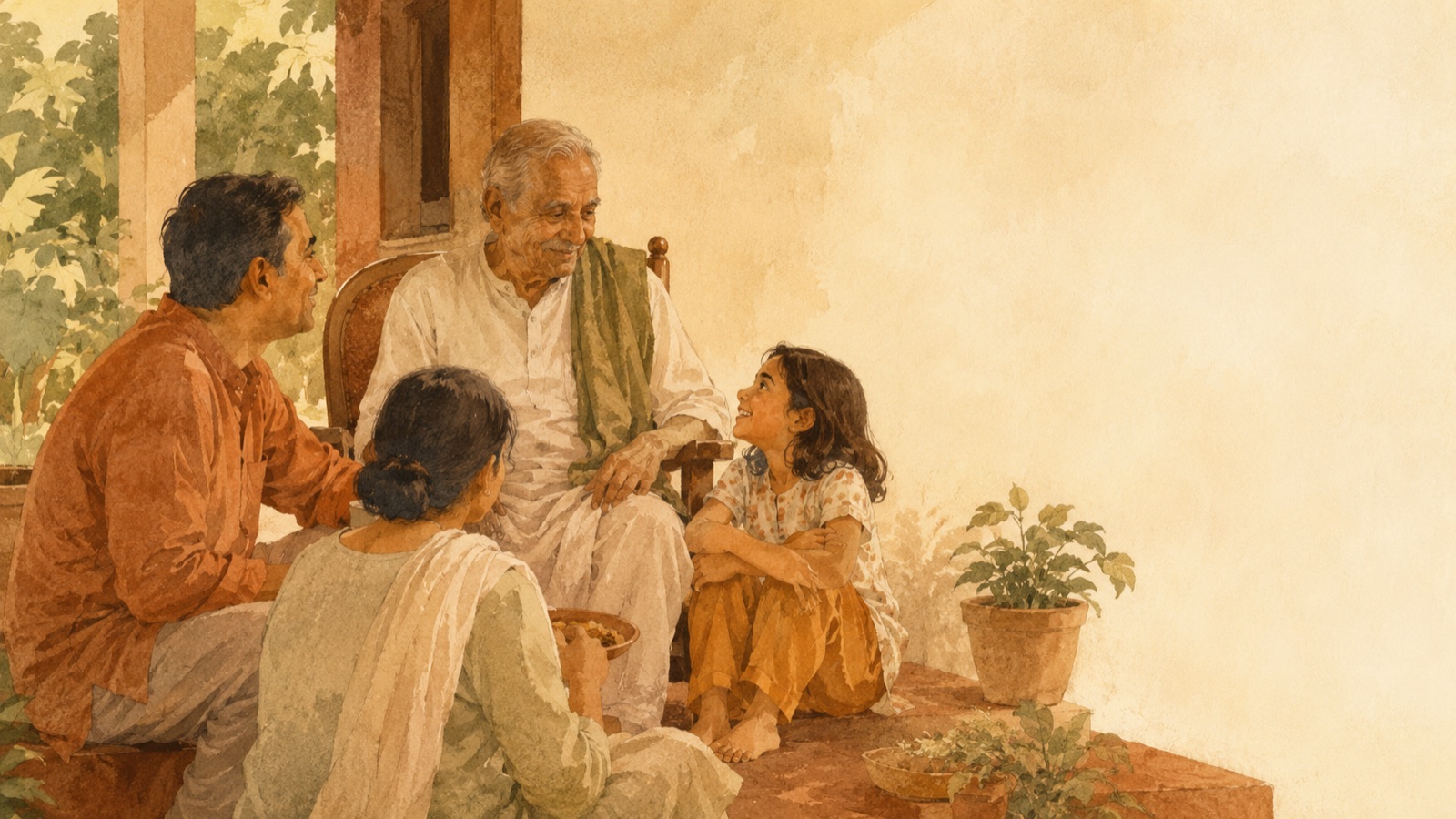
The names and dates may slip, but the person remains, and so does the love around them. Steady ground is not built in a single day; it is laid down in many ordinary, gentle ones.
In your corner
If worry about your own memory, or the weight of caring for someone, ever brings thoughts that life is not worth living, please reach out, not push through alone. You can call Tele-MANAS, the free national helpline, on 14416, any time, day or night. The crisis card below has more people you can reach.
Where this comes from
This guide helps you recognise and understand. It is not a diagnosis. For that, see a professional.