
The Stigma and Society series
How we see mental illnessMarriage, mental illness, and what families fear
An honest, plain guide to the fears around marriage and mental illness in India: what is true about heredity, how and when to talk about a condition, and why a treated illness and a full married life belong together.
Meera got married, and the sky did not fall
Before we talk about fears, meet a person. Many people in India live with a mental health condition, marry, and build full, ordinary lives. The fear of "what will happen" is loud. The quiet truth of lives actually lived is steadier, and far more common than families say.
Meera is 29 and works at a bank in Belagavi. In her early twenties she went through a long stretch of a treatable condition. It was the kind a doctor helps you manage. Her family's first worry was not her health. It was her marriage. "Who will marry her now," an aunt said, almost in a whisper.
Meera got treatment, the steady kind that takes time. A few years later she met someone, told him the honest version of her story, and married him. Today she goes to work and worries about ordinary things. The condition is a managed part of her life. The marriage her family feared would never happen has been the steadiest thing in her life.
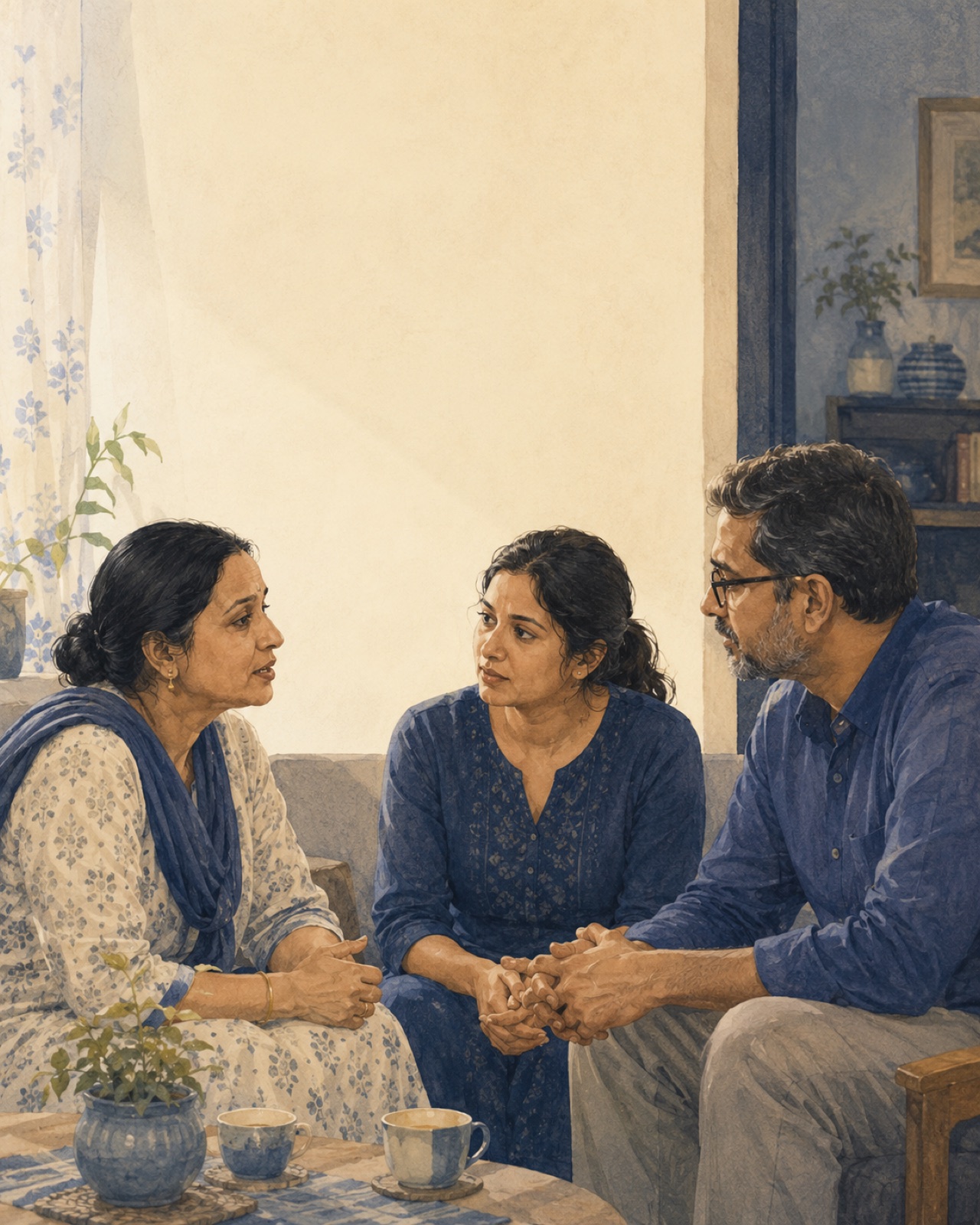
Meera's story is not unusual. It only sounds unusual because families rarely say these stories aloud. Shame keeps the good outcomes hidden and lets the fears do the talking. This guide puts the fears and the facts side by side, calmly. A family can then decide with clear eyes instead of rumour.
What families are really afraid of
The fears are real and worth naming, not dismissing. In India they cluster around three things: will this person still be able to marry, will it pass to the children, and what will people say. Naming a fear out loud is the first step to handling it well.
In India, marriage is often where stigma around mental illness becomes most real. A past or present condition gets treated as a barrier to marriage. It becomes something to hide during marriage talks. This one fear, of spoiled marriage prospects, drives families to hide it. It also makes them delay getting help, both for the person and for the wider family.
Underneath sit two beliefs that do real harm. The first is the hope that marriage itself, or having children, will somehow cure or settle the condition. The second is that the family's honour depends on keeping it hidden. In one study of families caring for a relative with a serious condition, about 46 in 100 believed marriage could make the illness worse. Yet many in the same families still believed marriage could cure it. Both cannot be true. The worry about honour and "log kya kahenge", what will people say, is shared across many Asian societies. It quietly feeds the very large gap between people who need care and people who actually get it.
Naming the fear is not the same as obeying it. You can take a worry seriously and still check whether it is true.
Will it pass to the children?
This is the fear that weighs heaviest, so it deserves the clearest answer. A condition in a parent does raise the chance for a child. It does not hand it down like an eye colour. Most children of a parent with a condition do not develop one. Heredity is a raised chance, not a sentence.
Here is the honest middle of it. When a parent has a serious mental health condition, the chance that a child will develop one by early adulthood is about one in three. That number is real. It is higher than for other families. It is also often misread. Most families hear "it runs in the family" and quietly round it up to "it is certain".
It is not certain. About one in three means that roughly two in three children of an affected parent do not develop a serious condition at all. A condition grows from a mix of many small genetic influences and the circumstances of a life. It does not grow from a single inherited fate. The chance is raised, but the most likely outcome, by a wide margin, is a child who does not develop the condition.
- A parent's condition raises the chance for a child. That part is true.
- The chance is about one in three, not a guarantee.
- That means roughly two in three children of an affected parent do not develop one.
- Conditions come from many genes plus life circumstances, not a single fate.
More, if you want it
There is one more thing the numbers leave out, and it matters. The conditions we are talking about are treatable. So even in the smaller group of children who do develop something, the picture is not the fixed tragedy families imagine. It is a health matter that responds to care, like many others. Heredity tells you about a chance. It tells you nothing about how a life turns out. That depends on care, support, and time, not on the gene alone.
What to tell, and when
Disclosure is a real dilemma, not a simple yes or no. Hiding a condition has real costs, and so can blurting it out at the wrong moment. One path protects both the person and the relationship. It is an honest, well-timed talk about a condition that is being managed.
Families often see only two options: hide it completely, or confess everything at once. Both can go badly. Hiding it carries its own weight: the constant fear of being found out, and the damage if trust breaks later. But honesty thrown out clumsily, too early or with no context, can scare a good person away. They might have accepted it easily with a little understanding.
There is a middle path. It treats the condition as what it is: a real, treatable, managed part of a person's health. You share it honestly with someone who has reason to know, once there is enough trust to hear it. An honest conversation about a managed condition protects a relationship better than either hiding it or pretending marriage will cure it.

The conversation is hard mostly in the imagining. In practice it is one human being telling another something true about their health. It is the way you might explain any condition you live with and manage. You do not owe a stranger your whole medical history. But you do owe a person you may marry an honest, calm account of something that is part of your life. Tell them before the relationship grows too deep to talk plainly.
- To whom: someone with real reason to know, like a prospective partner.
- When: once there is enough trust to hear it, not at the very first meeting.
- How: plainly, as a managed health matter, not as a shameful secret.
- What it is not: not a confession of guilt, and not a promise that marriage will cure anything.
In two or three plain sentences, write down how you would describe your condition to someone you trust. Frame it as a health matter you manage. Saying it once on paper, calmly, makes saying it to a person far easier when the time comes.
Marriage can, and does, work
A treated condition and a full married life are not opposites. They live together every day, in ordinary homes, all over the country. Most people who get care for the major conditions improve, and a managed condition is fully compatible with marriage, work, and raising a family.
Mental illness is treatable. Good care exists for the major conditions, and most people who receive that care improve. The catch in India is not that treatment fails. It is that most people who could benefit never reach it. Often the very fears this guide is about are the reason. When care does reach a person, a managed condition and a full life simply belong together.

A treated condition and a real marriage are not a contradiction. They are, in countless ordinary homes, the same life.
- Treatment that is steady and ongoing, not started and dropped.
- Honesty early, so neither person is carrying a secret.
- A partner who understands a flare is the illness, not a betrayal.
- Support from family that helps rather than hides.
Remember
Marriage is not a treatment, and it is not a cure. It is a partnership. A partnership can hold a managed condition the way it holds any other part of two real lives. It takes honesty, patience, and care that continues. That is not a fairy tale. It is the ordinary outcome for most couples who face this with open eyes.
You are allowed to ask for help
A family facing these fears does not have to rely on rumour and silence. People with a mental health condition have legal rights to dignity, privacy, and care. Free, confidential help is a phone call away, in your language, any time.
In India, the law is on the side of the person, not the shame. The Mental Healthcare Act of 2017 frames mental healthcare as a right. It protects dignity, privacy, and access to care. A condition is a health matter, not a scandal to be handled in whispers. The people living with one are entitled to be treated that way.
That also means you can get accurate information instead of guesswork. Free, private support is available across India through the national Tele-MANAS helpline on 14416, any time, day or night. A family weighing marriage, heredity, or disclosure can call and get real answers, in their own language. They no longer have to rely on what an aunt half-remembers.
If any of this feels too heavy
The fear, the secrecy, and the pressure around marriage can weigh very hard on the person at the centre of it. Sometimes a person, or someone they love, has thoughts that life is not worth living. Please treat that as a reason to reach out now, not to push through alone. You can call Tele-MANAS, the free national helpline, on 14416, any time, day or night. The crisis card linked below has more people you can reach.
Pick one fear from this guide that has been sitting on your family. It could be the marriage worry, the heredity worry, or "what will people say". Write it on one line. Beside it, write the one true fact from this guide that answers it. Keep the page. Facts on paper are harder for fear to argue with.
Where this comes from
This guide helps you recognise and understand. It is not a diagnosis. For that, see a professional.