
The For You series
Unusual experiencesMaking sense of unusual experiences
A warm, plain guide for unusual experiences: what it means to hear or see things others do not, or to hold a belief others do not share, why it happens, what truly helps, and how reaching out early makes a real difference.
They are real to you, and you are not alone
Some people hear or see things others around them do not, or come to hold a belief that no one else seems to share. These experiences feel completely real, they are more common than most people imagine, and they are not a sign that you are dangerous or "mad". They are something a person goes through, and there is real help.
Maybe you have been hearing a voice when no one is there. Maybe you have become sure of something the people around you cannot see the way you do. Maybe the world has started to feel charged with meaning, as if things are pointed at you. From the inside, none of this feels like imagination. It feels true, because to your mind, in that moment, it is.
That is the first thing worth saying plainly. These experiences are real to the person having them, and being told "it is all in your head" misses the point entirely. What you are going through is real to you, and that does not make you dangerous or broken.
And you are far from the only one. More people pass through experiences like these than ever say so out loud, because the fear and the silence keep them hidden.
More, if you want it
There is an old, cruel idea that someone going through these experiences is to be feared, that they are violent or beyond reach. It is simply not true, and it does great harm. Most people having unusual experiences are far more frightened than frightening, and far more likely to withdraw than to lash out. If you have read about yourself in those frightening words, set them down. They are not the truth about you, and they are not where this guide is going.
Say this once, plainly: what I am experiencing is real to me, and reaching out for help is allowed. Notice how that feels next to the silence or the fear you may have been carrying. You are allowed to treat this as something to get help with, not something to hide.
Voices, certainty, and pulling away
These experiences can take a few shapes: hearing voices when no one is speaking, sensing things that others do not, or an idea that feels completely certain even when those close to you do not share it. Around them often come confusion, fear, broken sleep, and a quiet pulling away from people.
For many people it begins with sound. A voice, or several, when the room is empty. The voices may comment, or warn, or argue, and they can feel as solid as any real one. For others it is a sense that something is there that no one else notices, or a meaning that seems woven into ordinary things, signs that feel aimed straight at you.
Sometimes it is an idea instead. One that settles in and feels absolutely certain, even as the people who love you gently say they do not see it the same way. None of this arrives calmly. It usually comes tangled up with confusion and fear. Nights where sleep will not come. A slow drawing back from friends and family, because it all feels too hard to explain. These experiences rarely come alone; the fear and the sleepless nights around them are part of the picture.
- Something feels real and certain, but others do not see it.
- Fear rises, sleep gets thin, and you pull away from people.
- The strain and the lost sleep make the experiences louder.
- The next day feels harder, and the loop turns again.
More, if you want it
This is why these experiences can feel so isolating. Explaining a voice no one else hears, or a certainty no one else shares, is exhausting, and the fear of being disbelieved or judged can be worse than the experience itself. So people often go quiet, and the quiet makes everything heavier. Naming what is happening, even just to one trusted person or a doctor, is often the moment the loop starts to loosen.
A sensitive alarm-and-meaning system
These experiences are not a character flaw, a punishment, or possession. They are linked to things like heavy stress, lost sleep, and sometimes substances, acting on a part of the brain that handles alarm and meaning. When that system is turned up too high, ordinary things can start to feel charged, certain, or threatening. No one is to blame.
Your brain is always doing two quiet jobs at once. It decides what deserves your attention. It decides what things mean. Most of the time it runs in the background and you never notice it. Under enough strain, that alarm-and-meaning system can get turned up too high. Then small, ordinary things start to feel loaded with importance, certainty, or threat.
Stress can push it there. So can long stretches of lost sleep. So, for some people, can certain substances. This is biology under pressure, not weakness and not wrongdoing. This is a brain system turned up too high, not a flaw in your character or a punishment you have earned.
It matters to say what this is not. It is not a punishment for something you did. It is not a sign that you are a bad person. It is not possession, and it is not a moral or spiritual failing. And it is not anyone's fault, not yours and not your family's. The research from Indian families is clear that the messages that actually help people are the ones that say recovery is possible and no one is to blame.
If a part of you has been asking "what did I do to deserve this?", try setting that question down for a moment. This is a health problem with real causes and real help, not a verdict on your worth. You did not cause it, and you are not being punished.
Help is real, and it works
There is genuine, proven help. Talking therapies, especially a kind of therapy made for these experiences, work alongside a doctor's support, family who understand, and a steady sleep routine. Where it is needed, a doctor can also offer tablets that help. The earlier this support starts, the better it tends to work.
The most important thing to know is that these experiences respond to help. A talking therapy built for exactly this, often called CBT for psychosis, helps people make sense of the experiences and ease the fear around them. The evidence behind it is solid. It does not ask you to simply argue yourself out of what you feel. It works gently, with you, on living alongside the experiences and turning down their power over your days.
Around that therapy sits the rest of the support. A doctor who listens and assesses without rushing. Family who understand enough to stand beside you rather than pull away. A steady sleep routine, because lost sleep feeds these experiences badly. And where it is needed, a doctor can offer tablets that help bring the experiences down to a more manageable level. You do not have to face this alone or fix it by willpower; real, proven help exists.

Ravi is 27 and works at a shop in Hubli. For a few months he had been hearing a voice that others could not, and had become certain his neighbours were watching him in a way that frightened him. He stopped sleeping, stopped seeing friends, and told no one for a long time. What slowly changed was not one big moment. A doctor saw him without judgement, a therapy helped him understand the experiences and take some of the fear out of them, his sleep was steadied, and his family learned to sit with him instead of arguing. The voice did not vanish overnight. But its grip loosened, and an ordinary life came back within reach.
More, if you want it
A word about the tablets, because there is a lot of fear and shame around them. If a doctor offers them, they are a tool, weighed together with you against the benefits and the downsides, and meant to make the experiences more manageable so the rest of the help can do its work. They are something to discuss openly with a doctor, not something to be ashamed of and not something to start or stop on your own. The lasting change usually comes from the whole picture, the therapy, the support, the sleep, and the care, working together.
- A talking therapy built for these experiences.
- A doctor's steady support and assessment.
- Family who understand, and a steady sleep routine.
- Tablets a doctor can offer, where they are needed.
Remember
Getting better is rarely all at once, and a hard stretch does not undo your progress. The experiences may quieten in steps, with some days easier than others. Staying connected to your help, keeping your sleep steady, and being gentle with yourself on the harder days is how recovery usually looks. Steady and supported beats facing it alone.
Reaching out early changes things
You do not have to wait until things get severe to deserve help. When these experiences are frightening you, wearing down your days, or pulling you away from people, that is reason enough to reach out. Help offered early, without delay, leads to better outcomes than waiting, and the first step can be a small one.
There is no threshold of suffering you must cross first. If the experiences are frightening you, costing you sleep, or making everyday life hard, that is already enough reason to talk to someone. Reaching out early genuinely matters. When assessment and help come without long delay, people tend to do better than when help is put off. This holds in Indian settings too. Support that reaches people in their own communities, and includes the family, works.
The first step can be small. A word to someone you trust. A visit to a doctor. A call to a free helpline. You do not have to explain everything perfectly or have the right words ready. You only have to start.
Help you can reach, any time
You do not have to carry this alone, and reaching out is a sign of strength, not weakness. You can call Tele-MANAS, India's free national mental health helpline, on 14416, any time, day or night, in your own language. If you ever have thoughts of harming yourself, please reach out right now, to the helpline or to someone you trust. The crisis card linked below has more people you can reach.
Write down one small first step and keep it on your phone: a person you could tell, a doctor you could see, or just the number 14416. Naming the step ahead of time makes it far easier to take when you are ready, and the first step is the hard one.
This is not the truth about who you are
Many people who go through these experiences recover or go on to live full lives. Treatment works, you are not alone, and the help is real. The stigma and silence around these experiences, especially heavy in many Indian families, is not the truth about who you are.

The heaviest part for many people is not the experiences themselves. It is the fear of what they might mean about them, the worry that they are now broken or beyond hope. That fear is understandable, and it is wrong. You are a whole person going through something hard, not the sum of an experience.
Recovery is real. It usually comes quietly, in steps, with help and time, rather than in one dramatic moment. For some people the experiences fade a great deal. For others they become quieter and easier to live alongside. Either way, a full life remains possible. In many Indian families these experiences are met with silence, fear, or shame. That silence falls heaviest on the person living through it. The silence is not the truth about you, and neither is the stigma. You are not alone, and you do not have to carry this without help.
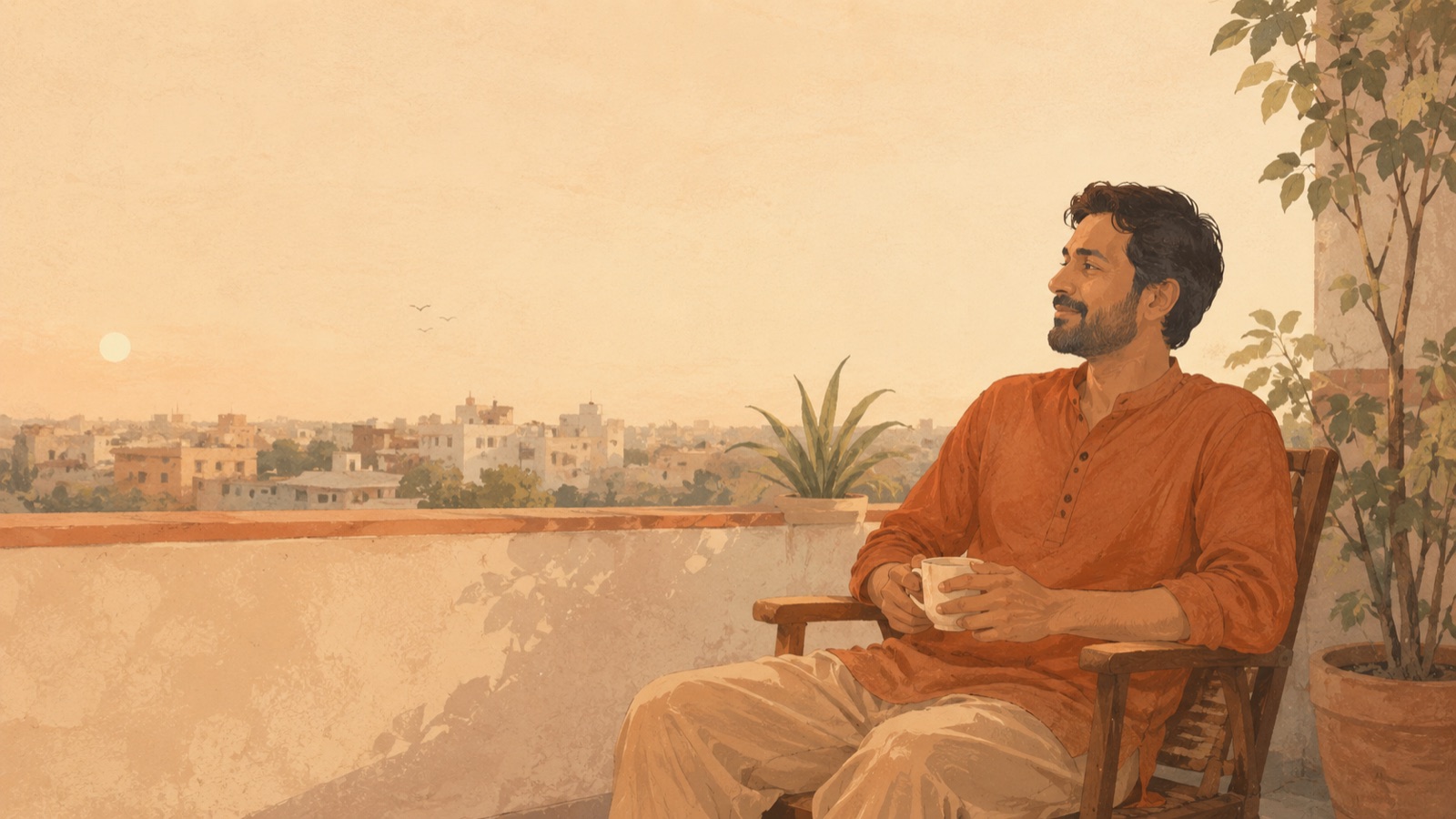
The same mind that learned to feel the world as charged and frightening can, with steady help and time, find solid ground again. It rarely happens in one bright moment, and almost always across many ordinary, gradually steadier days.
More, if you want it
Stay close to the help that steadies you, forgive the harder days, and start again gently when one knocks you back. Picking your support back up after a rough stretch is not starting over. It is the work itself, and it is how most real recovery actually looks. Steady ground comes back not in one perfect day but in many ordinary ones, most of them quiet, many of them helped by not facing this alone.
Today, take one small step toward steadier ground: tell one trusted person, save the number 14416, or decide on a doctor you could see. Keep it small, keep it real, and let the steadier days begin to add up.
In your corner
However heavy it feels right now, you do not have to face it alone, and it can get better with help. You can call Tele-MANAS, the free national helpline, on 14416, any time, in your own language. If you ever have thoughts of harming yourself, please reach out right now. The crisis card below has more people you can reach.
Where this comes from
This guide helps you recognise and understand. It is not a diagnosis. For that, see a professional.