
The For You series
Autism in adultsLiving as an autistic adult
A warm, plain guide to being an autistic adult: that it is a different way the brain is wired and not an illness, how it can show up, why life may have felt harder, the things that help, and when to reach out.
A different way the brain is wired
Being autistic is a difference in how your brain develops and works. It shapes how you take in the world through your senses, how you read other people, and how you make sense of things. It is a difference, not an illness, and there is nothing about it that needs to be cured. Many people only discover this about themselves as adults.
You may have spent years feeling slightly out of step with the people around you, without ever having a word for why. Autism is one word for it. It does not mean something is wrong with you. It means your brain is wired in a particular way, present from the start. That wiring changes how you experience sound, light, and conversation. It also changes how you read the small unwritten rules other people seem to just know.
It is a difference in development, not a sickness you caught and not a habit you can drop. There is no cure, because there is nothing broken to fix. Being autistic is a difference in how your brain works, not an illness that needs a cure.
And finding this out as a grown adult is far more common than most people realise.
More, if you want it
For a long time, autism was thought of as something only seen in children, and mostly in boys. We now understand it very differently. Autistic adults have always been here. Many were simply missed, especially those who learned early to hide how they felt and to copy the people around them. Recognising yourself as autistic later in life is not a late arrival of a problem. It is a name, at last, for something that was always true about how you are made.
The shape of an autistic life
Autism shows up in many ways, and no two autistic people are the same. Common threads are differences in how you communicate and read others, strong sensitivity to sound, light, touch or texture, a real need for routine and knowing what comes next, deep and absorbing interests, small repeated movements that soothe you, and masking, where you cover up how you really are to fit in.
There is no single way to be autistic, but some things come up again and again. Conversation can feel like a code everyone else was handed and you were not. You might take words literally or miss a hint. Small talk can drain you, while a topic you love pours out of you easily. Your senses may run loud, too. A flickering tube light, a scratchy label, or a crowded bus can be genuinely painful when others barely notice.
Routine matters because it makes the world predictable, and a sudden change can throw the whole day. Deep interests are a source of real joy and focus. Small repeated movements, sometimes called stimming, are not something to be ashamed of; they help you settle. And many autistic people learn to mask, smoothing over their natural way of being to seem more like everyone else. None of these are faults; they are simply how an autistic mind meets the world.
- The world feels built for other people, so you hide how you really are.
- You copy, smile, and push your real reactions down to fit in.
- Holding it all up takes more and more energy.
- You run low, so fitting in gets harder, and you mask even harder.
More, if you want it
Masking can look like rehearsing what to say before a phone call, forcing eye contact that feels wrong, copying other people's expressions, or holding in a strong reaction to a sound until you are alone. It can be so practised that even you forget you are doing it. That is part of why so many autistic adults go unrecognised for years: from the outside, the effort is invisible. From the inside, it is exhausting.
It was never that you were not trying
If life has felt harder than it seems to for others, there are real reasons, and none of them are that you were weak or not trying. The everyday world is built for non-autistic people. Masking, the work of hiding how you really are, is genuinely exhausting. And a diagnosis that comes late often follows years of feeling different without knowing why.
Think of how much of daily life assumes a non-autistic brain: open-plan offices, noisy gatherings, the unspoken rule that you should look someone in the eye, the expectation that plans can change at the last minute and you will simply adjust. For an autistic person, moving through that world takes constant extra effort that others never have to spend.
Masking adds another layer. Hiding your real reactions, all day, every day, is tiring in a way that is hard to explain to someone who has never done it. Over time it wears you down. And if no one ever told you that you were autistic, you may have spent years believing the gap you felt was a personal failing rather than a difference. The exhaustion was real work, not weakness, and the difference was never your fault.

Meera is 38 and works at a bank in Pune. For as long as she could remember, the office left her drained in a way her colleagues never seemed to feel: the strip lights, the constant chatter, the small talk she rehearsed in her head before each lunch break. She thought she was simply weaker than everyone else. Learning, in her thirties, that she is autistic changed the story. The tiredness was not weakness. It was the cost of translating herself into someone else's language all day long. With a few changes, noise-cancelling headphones, a quieter corner, permission to skip the after-work crowds, the days stopped costing her quite so much.
Support, not a cure
What helps is not being fixed, because there is nothing to fix. What helps is support and understanding: knowing yourself better, adjusting your surroundings to fit your senses and your need for routine, letting yourself unmask where it is safe, finding people who get you, and asking for fair, reasonable adjustments at work, in study, and in daily life.
The most useful shift is simple. Stop trying to be less autistic. Build a life that fits the autistic person you are instead. That starts with understanding yourself. Notice what drains you and what restores you. Learn what your senses can and cannot bear, and what you need to feel steady. From there, small accommodations make a real difference: softer lighting, headphones in loud places, a predictable routine, a warning before plans change.
Unmasking, where it is safe to, gives you back the energy you spent hiding. Finding other autistic people, or simply people who accept you as you are, can lift a weight you did not know you were carrying. And you are allowed to ask for reasonable adjustments, at work or in study, because the world bending a little to fit you is fair, not a special favour. You do not need to be cured; you need a life that fits how you are made.
- Understand yourself: learn what drains you and what restores you.
- Adjust your surroundings to fit your senses and your routine.
- Unmask where it is safe, and rest when you need to.
- Find your people, and ask for fair adjustments at work or study.
Pick one thing this week that quietly drains you, a noisy room, a fixed lunch with colleagues, bright overhead lights, and change one small part of it. Headphones in, a quieter seat, a short walk alone afterwards. You are not asking permission to exist; you are setting up your day to cost you less.
- Knowing yourself: what drains you, what restores you, what you need.
- Accommodations that fit your senses and your need for routine.
- Finding your people, the ones you do not have to translate for.
- A clinician's support, including help for anxiety or low mood if needed.
When support is worth seeking
It is worth seeking an assessment or support when daily life, work, or relationships are being worn down, or when other difficulties pile up alongside. Anxiety and low mood are common for autistic adults, and a deep tiredness called autistic burnout can build up over time. A clinician can assess things, offer support, and where it helps, a doctor can offer tablets that ease anxiety or low mood.
Reaching out is worth it when things start to cost more than you can pay. That might be when work, relationships, or simply getting through the day are being ground down. It might be when you sense something underneath needs care. You do not have to wait until you are at breaking point to deserve help.
This matters because autistic adults often carry more than autism alone. Anxiety and low mood are common. A heavy, flattening exhaustion that some call autistic burnout can also build up, after too long spent masking and pushing through. A clinician can look at the whole picture, help you understand yourself, and put support in place. Where it would help, a doctor can also offer tablets that ease anxiety or low mood. Those go alongside the rest of the support, not instead of it. Reaching out early, before you are at breaking point, gives you the best chance.
If things feel too heavy
If you ever feel that the weight is too much to carry, or you have thoughts that life is not worth living, please reach out right away. You do not have to carry it alone, and it can ease with help. You can call Tele-MANAS, the free national helpline, on 14416, any time, day or night. The crisis card linked below has more people you can reach.
Write down one thing you would want a clinician to understand about you, and keep it on your phone. Something like "loud places drain me fast" or "I have felt low for months." Having the words ready makes the first conversation far easier, and the first one is the hardest.
You are not broken
Being autistic comes with real strengths, and you have every right to acceptance and to belong. You are not broken, and you do not need to become someone else. Self-acceptance and finding your people matter deeply. In India, awareness and services are still growing, so finding the right support and the right people is part of living well.

It is easy, after years of feeling out of step, to believe that being autistic is mostly a list of difficulties. It is not. The same wiring that makes the world feel loud can bring deep focus, honesty, loyalty, a rich inner world, and the ability to care intensely about what matters to you. You are a whole person, not a set of problems to manage, and you have as much right to acceptance and a good life as anyone.
The work, in the end, is less about changing yourself and more about accepting yourself, and finding the people and places where you do not have to translate. In India, awareness of autism in adults is still growing, and good support can take real effort to find, but it is out there, and it is worth the search. The silence and misunderstanding around autism are not the truth about you. You were never broken; you were waiting for a world, and a few people, that fit.
Remember
You do not have to earn your place by masking harder or being less yourself. Being autistic is a difference, not a deficit. Build the life that fits you, find the people who get you, rest when you need to, and reach for support when it helps. That is not giving up. That is how a good autistic life is actually built.
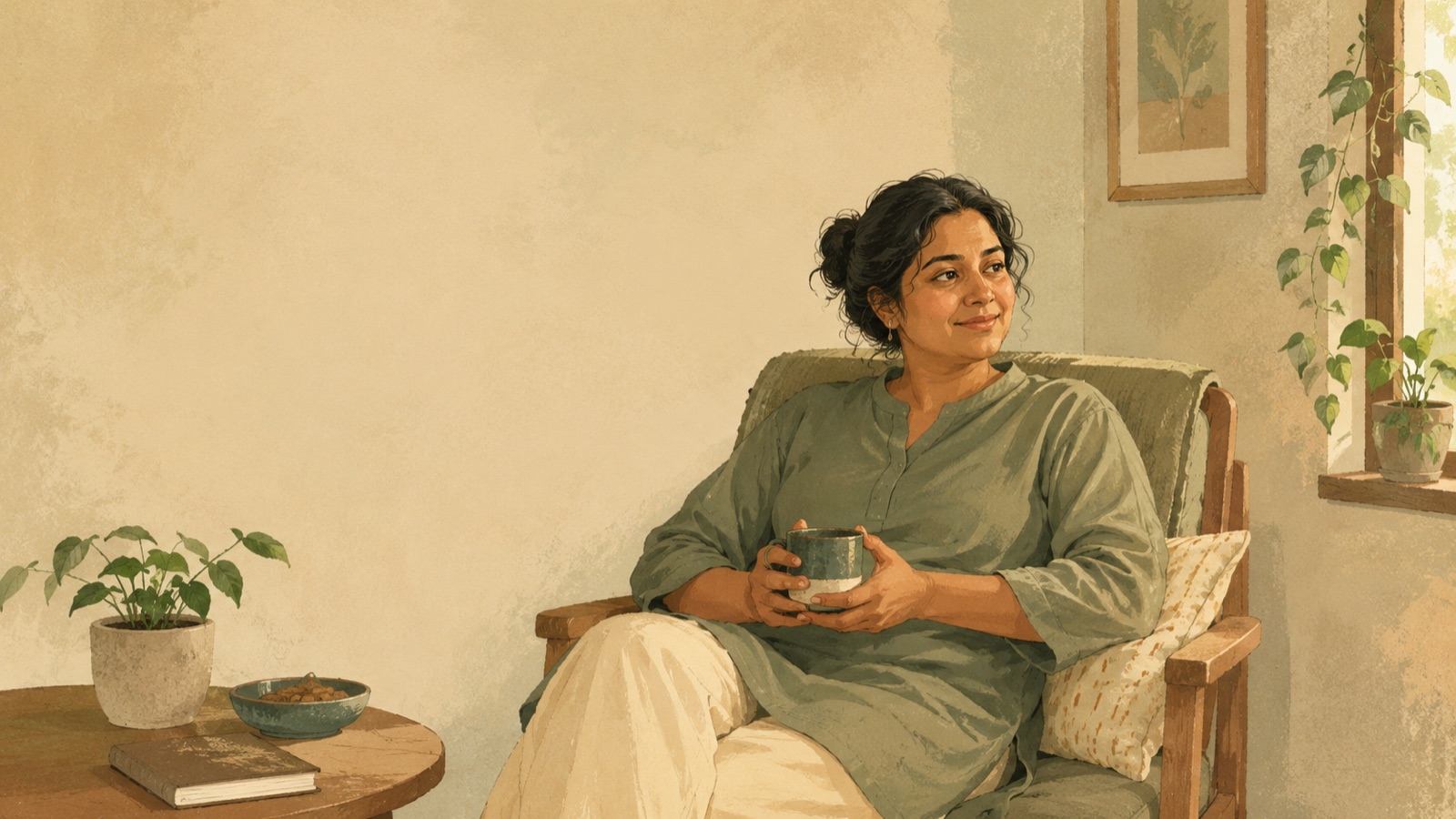
The same mind that learned to hide, exhausted, in a world built for someone else can, with understanding and the right people, learn to stand on steady ground and be itself out loud.
In your corner
If the weight of it all ever brings thoughts that life is not worth living, please reach out, not push through alone. You can call Tele-MANAS, the free national helpline, on 14416, any time, day or night. The crisis card below has more people you can reach.
This week, find one small place where you can be fully yourself, no masking, even for ten minutes. A quiet room, a hobby you love, a message to someone who gets you. Notice how different it feels not to translate. That feeling is worth building a life around.
Where this comes from
This guide helps you recognise and understand. It is not a diagnosis. For that, see a professional.