The For You series
Memory and ageingYour memory and daily-life toolkit
A few simple pages to steady your week, give everything a home, track your medicines and visits, get ready for the doctor, and protect the everyday habits that help your memory. The companion you fill in yourself.
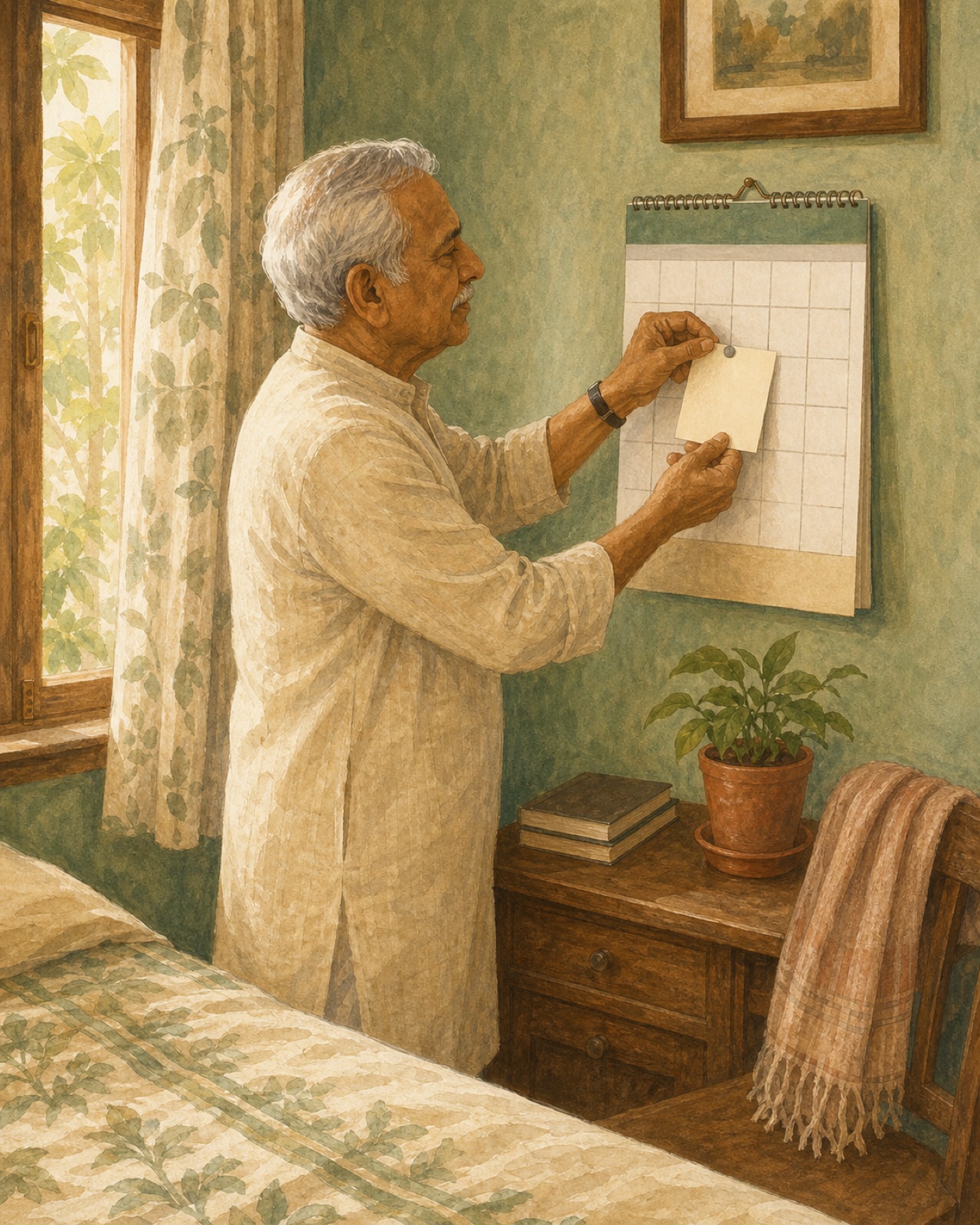
My weekly routine grid
When the days blur together, a fixed routine does a lot of the remembering for you. Regular, enjoyable activities that ask you to think, recall, and be with other people have been shown to help thinking and memory, and putting them on set days is how you keep the habit going. Fill one day at a time.
A steady week is not about doing more. It is about a few good things landing on the same days each week, so your mind does not have to hold the whole plan by itself. Write the one thing that matters most for each day. Leave the rest loose.
| Day | The main plan | Who I will see | Done |
|---|---|---|---|
| Monday | |||
| Tuesday | |||
| Wednesday | |||
| Thursday | |||
| Friday | |||
| Saturday | |||
| Sunday |
More, if you want it
Keep the grid where you already look every day: near the kettle, by the front door, on the fridge. A plan you cannot see is a plan you will forget. If a day feels empty, that is fine; one good plan beats five you cannot keep.
Pick two things you enjoy that involve other people or a bit of thinking, a walk with a neighbour, a card game, a temple visit, a call to family, and give each one a fixed day. Same day, every week. Tick the box when it is done.
Where things live
Most "lost" things are not lost. They are just not where you expected them. When each important thing has one fixed home, you stop searching and start knowing. Write down where each thing lives, and then always return it there.
The trick is simple: decide the spot once, write it here, and put the thing back in that spot every single time. A hook by the door for keys. A bowl for the phone. One drawer for papers. Boring is good. Boring is what your memory can lean on.
| The thing | Its home |
|---|---|
| House keys | |
| Phone and charger | |
| Glasses | |
| Wallet or purse | |
| Medicines | |
| Important papers, ID, bank book | |
| Emergency numbers |
Start with the one thing you lose most often. Give it a home today, tell one person in the house where it lives, and put it back there tonight. Add one more thing tomorrow.
My medicine and appointment tracker
Medicines and appointments are easy to muddle when there are several, and worry only makes it harder to hold in your head. A written tracker takes that weight off your memory. Fill it in with your doctor or a family member so the details are right.
Do not rely on memory for medicines. Write down each one, when you take it, and tick it off as you go. For the name, you can simply note what it is for ("the one for blood pressure") if that is easier to remember than the label.
| Medicine, what it is for | Morning | Afternoon | Night | Notes |
|---|
More, if you want it
A weekly pill box, filled once every Sunday, is one of the simplest tools there is. If you take several medicines, ask your doctor or chemist whether one would suit you. Keep this tracker with your medicines, in their fixed home.
Questions for my doctor
A clinic visit goes fast, and it is easy to forget the very thing you meant to ask. Writing your questions down before you go means you leave with answers, not new worries. A doctor is the person who can look at the full picture and guide you.
Fill this while you are calm at home. Take it with you and hand it over, or read from it. There is no small question here; if it matters to you, it belongs on the list.
Things I might want to ask about (tick any that fit):
- Whether my memory changes are something to look into further
- Whether any of my medicines could affect my memory
- Whether my hearing or eyesight should be checked
- What everyday habits would help me most
- Who to contact if things get harder
My habits check
A lot of what protects memory in later life comes from everyday things you can act on: keeping active, staying in regular contact with people, and getting your hearing checked and treated. None of this is a cure, and it is never too late to start. Use this page to see which habits are already strong and which could use a little attention.
Think of the brain and body as one team. Small, regular habits do more than any single big effort. Tick where you are doing well, circle where you would like to build a little.
| Habit | Doing well | Could build | My next small step |
|---|---|---|---|
| Moving my body most days | |||
| Seeing or calling people | |||
| Getting good sleep | |||
| Hearing checked, aids worn | |||
| Doing something that makes me think |
More, if you want it
On movement: staying physically active helps older adults keep up their day-to-day tasks and independence, so even light activity built into the week is worth protecting. On hearing: if sound is getting harder to follow, get it checked, one large study found that helping people hear better slowed the decline in thinking and memory among those already at higher risk, which is why a hearing check belongs on this list. If any of this feels heavy, that is a good thing to raise with your doctor.
Choose one habit from the list, just one, and name the smallest next step you could take this week. A ten-minute walk. One phone call. Booking a hearing test. Small and steady wins here.
Where this comes from
Further reading
A tool to fill in, not a test. There are no grades here. Bring it to a doctor who knows your history.