The For You series
Alcohol and drug useCutting down, living free
A warm, non-judging guide to the pull of alcohol and other drugs: why it is not about willpower, how it takes hold, and the real, gentle paths back to a freer life.
It is not about willpower
Addiction is a health condition, not a weakness or a bad character. Repeated use slowly changes how the brain's reward system works, which is why it is so hard to stop by willpower alone, and why it can get better with the right help.
You may have been told you have no self-control, that you are letting people down, or that you just need to decide to stop. You have probably already tried to stop, more than once, and meant it every time. The effort was real. The shame that followed missed the point.
The brain has a reward system that learns what feels good and pulls you back toward it. Alcohol and other drugs work directly on that system, far more strongly than ordinary pleasures. Over time the brain learns to expect the substance and to crave it, and that learning is deep and automatic. Addiction lives in the brain's reward wiring, not in your strength of character.
It is also far more common than most families ever say out loud.
More, if you want it
This is why "just stop" is such poor advice, however kindly it is meant. By the time use has become a daily need, it is no longer a simple choice made fresh each morning. The pull is wired in, and it fires before you have even decided anything. Meeting it with willpower alone is like being told to out-stubborn your own thirst. Understanding the machinery is not an excuse. It is the first honest step toward changing it.
Say this once, plainly: this is a health problem, not proof that I am weak. Notice how different that feels from the things you have been told, or have told yourself. You are allowed to treat it as a condition to work on, not a sin to confess.
Tolerance and the craving loop
Two things keep addiction going: tolerance, where you need more to feel the same, and craving, the strong pull to use that builds until using feels like the only relief. Neither is a sign of weak will.
At first the substance does something for you: it relaxes, numbs, lifts, or quiets a hard feeling. The brain notes that it worked. With repeated use, two things change. You build tolerance, so the same amount does less and you need more to feel the old effect. And the brain starts to crave. It sends a strong, often physical pull toward using, cued by certain times, places, or feelings.
Then a loop forms. A trigger, a stress, a mood, a time of day, sets off craving. Using brings quick relief. The relief teaches the brain that using is the answer, so the next craving comes faster and harder. The loop is not proof you do not care. It is proof the wiring is doing exactly what it learned to do.
- A trigger lands: a stress, a feeling, a time or place.
- Craving rises, a strong pull toward using.
- Using brings quick relief, and the brain learns the lesson.
- The pull returns sooner and stronger next time.
More, if you want it
This is also why stopping is hardest in the exact moments life is hardest. The same brain learned to reach for a drink or a drug when things hurt. It reaches hardest when things hurt most. That is not a character flaw showing up under pressure. It is an old, well-practised survival shortcut firing when you are least able to argue with it. Knowing your own triggers, written down plainly, is one of the most useful things you can do.
When stopping needs a doctor
With heavy, regular use the body adapts too, so stopping suddenly can bring withdrawal. For alcohol and for sleeping-pill or anxiety medicines (benzodiazepines), sudden withdrawal can be dangerous, even life-threatening. Do not stop those alone. Get medical help to stop safely.
When the body has had a substance regularly for a long time, it adapts to having it around. Take it away suddenly and the body reacts: this is withdrawal. For many substances withdrawal is deeply unpleasant but not dangerous. For a few, it is genuinely risky.
Heavy alcohol, and medicines like sleeping pills or anxiety tablets (benzodiazepines), are the ones to be careful with. Stopping these suddenly after long heavy use can cause shaking, confusion, or fits (seizures). It can even bring on a dangerous state called delirium tremens, which can be life-threatening. This is not a reason to keep using. It is a reason not to quit those particular substances cold and alone. A doctor can help you stop safely, sometimes with medicine to ease the withdrawal.
A safety note
If you drink heavily every day, or take sleeping or anxiety tablets regularly, please do not stop all at once on your own. Speak to a doctor first so you can stop safely. If you ever feel unwell or unsafe while cutting down, you can call Tele-MANAS, the free national helpline, on 14416, any time, day or night.
Cutting down, or stopping
Help is real and it works. Both cutting down and stopping fully are valid goals. What helps most is knowing your triggers, learning to ride out a craving, leaning on people instead of facing it alone, and choosing the right support with a doctor.
There is no single right way out, and you do not have to swear off everything forever today to begin. For some people the goal is stopping completely. For others it is cutting down to a safer level first. Both are real progress, and a good clinician will help you choose the goal that fits your life and your health.
A craving feels like it will last forever, but it does not. It rises, peaks, and passes, usually within minutes, whether or not you use. Learning to ride that wave, instead of fighting it head-on, is a skill you build with practice. You wait it out, distract, breathe, or call someone. You do not have to defeat a craving. You only have to outlast it.
- Pick one change, small enough that you are fairly sure you can do it.
- Spot the triggers: the times, places, and feelings that set off the pull.
- Ride the urge: wait it out, it always passes, and reach for a person.
- Keep what works, forgive a slip, take the next small step.
The biggest myth is that you should be able to do this alone. Connection, not isolation, is one of the strongest things going for recovery. Trying to hide it and grit through it by yourself is the hardest possible road. Letting one trusted person in, a friend, a family member, a doctor, a support group, changes the odds.
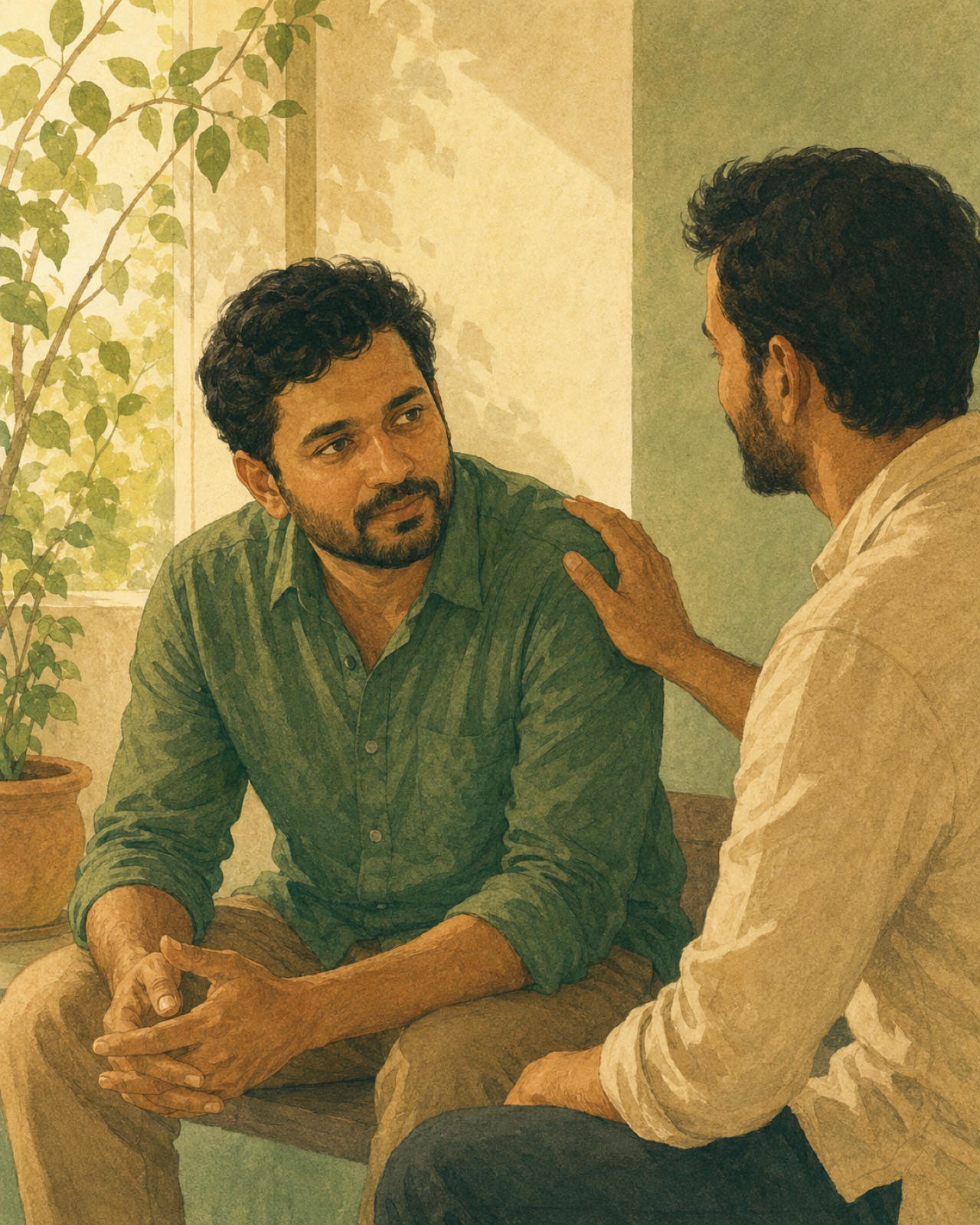
Ravi is 34 and drives a delivery van in Belagavi. A drink after work to unwind became two, then most of the day, until mornings felt impossible without it. He hid it carefully, sure that admitting it would make him less of a man. What turned things was not a dramatic rock bottom. It was one honest conversation with his older brother, who did not lecture him, just sat with him and helped him see a doctor. The cutting down was slow and uneven after that. But he was no longer doing it alone.
- Talk therapy that builds your own reasons and plans for change.
- Medicines a doctor may offer, to ease cravings or support stopping.
- People: a trusted person, a group, others who get it.
- A plan for the urge, and for the slip when it comes.
More, if you want it
Medicine can be part of the help, not a sign of failure. For alcohol, a doctor can offer tablets that reduce craving or support staying off it, weighed with you against your health and your goal. For some other drugs, steady treatment prescribed and followed by a doctor is one of the most effective options there is. None of these works by magic, and none replaces support and your own effort. But for the right person at the right time, they tilt a hard climb in your favour. They are a tool to discuss with a doctor, not the whole answer, and not a thing to be ashamed of.
Remember
Cutting down is not all-or-nothing, and a hard week is not the end. The skill is to keep the goal in sight, lean on people, and take the next small step, even when the last one did not go to plan. Smaller and steadier beats big and alone.
When to reach for help
When use has its own grip, when you keep going despite the harm, when stopping is hard or brings withdrawal, that is a signal to get help, not to try harder alone. Treatment works, and reaching out early gives the best chance.
A drink or an occasional indulgence is part of many lives. It is worth getting help when the substance starts running the show. That can look like using more or longer than you meant to. It can look like carrying on even though it is harming your health, work, money, or the people you love. It can look like not being able to cut down however hard you try, or stopping bringing on withdrawal. None of that makes you a bad person. It means the problem has its own momentum now and needs proper support to turn around.
Help is real and it works. Talking therapies, support that fits your life, and medicine for some people, often work best together, and the earlier you reach out the better the odds. You do not have to hit some imagined bottom first to deserve help. You only have to want your life to be larger than this.
I thought asking for help would make me less of a man. It was the first strong thing I had done in years.
Ravi, 34
Write down one question you would want to ask a doctor or counsellor about your drinking or drug use. Keep it on your phone. Having the question ready makes the first visit far easier, and the first visit is the hard one.
More than this
Addiction is something you are living through, not who you are. Recovery is real and ordinary, relapse is part of the road for many people and not a failure, and the shame that surrounds all this is the heaviest and least useful part.
The hardest part for many people is not the craving. It is the quiet belief that being addicted makes them weak, shameful, or a burden to everyone who loves them. That belief is understandable, and it is wrong. Addiction is a condition you are working through, not a verdict on your worth, your love for your family, or your future.
Recovery is not usually a straight line. Many people slip, return to use, and start again, more than once, before it holds. A relapse is information and a hard day, not the end of the road and not proof you have failed. In many Indian families this is carried in secrecy and called a disgrace, and that silence falls heaviest on the person living it, and on those beside them. The silence is the old shame talking, not the truth about you.

The same person who learned to reach for the substance can, with help and time, learn to reach for life instead.
More, if you want it
Keep what helped, forgive the days that did not, and take the next small step. Beginning again, gently, after a slip is not starting over. It is the work itself, and it is how most real recovery actually looks. Steady ground comes back not in one grand decision but in many ordinary ones, most of them quiet, most of them helped by someone.
In your corner
If cutting down ever feels unsafe, or the low days bring thoughts that life is not worth living, that is a moment to reach out, not to push through alone. You can call Tele-MANAS, the free national helpline, on 14416, any time, day or night. The crisis card linked below has more people you can reach.
Tonight, write down one thing you did today that the old habit would not have let you do. However small, that was you, choosing your life. Do this for a week, and watch what it does to how you see yourself.
Where this comes from
Further reading
This guide helps you recognise and understand. It is not a diagnosis. For that, see a professional.