The For You series
Sleep and insomniaWhen sleep won't come
A warm, plain guide to sleep: why broken sleep is a health problem and not a discipline you lack, what throws your nights off, the small habits that bring sleep back, and when to reach for help.
It is not a discipline you lack
Sleep is a health need, not a habit you are too weak or too undisciplined to keep. When sleep stops coming night after night, that is a real and common problem, not proof that you lack willpower, and for most people it gets better with the right habits and help.
You may have been told you just need more discipline, that you should put the phone down and stop making excuses. You may have said the same things to yourself, lying awake and angry at your own body. The truth is that you have probably been trying very hard to sleep, and trying is part of what keeps you awake.
Sleep is something the body does on its own when the conditions are right, like hunger or healing. It is not a task you can force by effort, and it is not a sign of character that it sometimes goes wrong. Sleep is a health need your body runs on its own, not a discipline you are failing at.
And broken sleep is far more common than most people ever say out loud.
More, if you want it
This is why "just try harder to sleep" is such poor advice, however kindly it is meant. Sleep is one of the few things in life that effort pushes away. The more you lie there willing it to come, checking the time, doing the maths on how little is left, the more awake and tense you become. Understanding that this is a health problem, not a failure of will, is not an excuse. It is the first honest step toward fixing it.
Say this once, plainly: poor sleep is a health problem, not proof that I am lazy or weak. Notice how different that feels from the things you have been told, or have told yourself. You are allowed to treat it as a problem to work on, not a fault to confess.
The harder you chase it
Insomnia is more than one bad night. It is trouble falling asleep, staying asleep, or waking too early, often with a mind that races the moment your head hits the pillow. The cruel part is that the harder you try to sleep, the further sleep moves away.
A bad night happens to everyone. Insomnia is different. It is when sleep is hard to get most nights, for weeks, even though you have the time and a place to sleep, and it leaves you tired, low, and foggy through the day. It often shows up as a mind that will not switch off, the worries of the day arriving exactly when the lights go out, or a wake-up at three in the morning with no way back down.
Then a quiet trap forms. Lying awake feels awful, so you start to try to sleep: forcing your eyes shut, willing it to happen, watching the clock. But trying winds the body up, not down. The bed starts to feel like a place where you fight, not rest. The harder you chase sleep, the more awake you become.
- You cannot sleep, and lying awake feels worse by the minute.
- You try harder, force it, watch the clock count down.
- The body tenses and the mind races faster.
- Sleep slips further away, so tomorrow night you try even harder.
More, if you want it
This is also why the advice to "just relax" can feel impossible. By the time you are lying there at 2am, relaxing on command is the one thing the body will not do. The way out is not to try harder to sleep. It is to take the pressure off sleep altogether, get out of the fight, and let the body do what it knows how to do once the conditions are right.
Your body clock, and what throws it off
Your body runs on an inner clock that decides when you feel sleepy and when you feel awake. Screens late at night, late chai or coffee, long daytime naps, and going to bed at all hours quietly throw that clock off, and using the bed for everything but sleep teaches the body to stay alert there.
Two things mostly decide your sleep: an inner body clock set largely by light and routine, and a slow build-up of sleep pressure across the hours you are awake. When both line up, sleep comes easily. When they are thrown off, it does not.
Plenty of ordinary things throw them off. Bright screens late at night tell the clock it is still day. Chai, coffee, or other stimulants in the evening keep the body wound up for hours. A long or late afternoon nap quietly drains away the sleep pressure you need at night. Going to bed and waking at wildly different times leaves the clock with no rhythm to settle into. And scrolling, working, or worrying in bed slowly teaches your body that bed is a place to be alert. The bed should mean sleep, not a place you go to lie awake and worry.
For one week, jot two lines each morning: roughly when you went to bed and woke, and how rested you felt out of ten. You are not fixing anything yet, only noticing your own pattern. A doctor can do a great deal more with "I am in bed by eleven but awake until two" than with "I just sleep badly."
The habits that bring sleep back
Help is real and it works. The proven approach is not a stronger effort to sleep, it is a set of small habits: keep the bed for sleep, get up at the same time each day, wind down before bed, and only go to bed when you are actually sleepy. For some people a doctor may add short-term help.
The single most useful idea in insomnia is a quiet reversal. We lie in bed trying to make sleep happen. The proven treatments do the opposite: they take the effort out and rebuild the body's own signals. This is the heart of an approach, sometimes called CBT for insomnia, that works better over time than relying on a pill, and it is built from small, doable habits.
A few of them carry most of the weight. Keep a steady wake-up time, even after a rough night, so the clock has something to anchor to. Wind down for a calm hour before bed, lights low and screens away, so the body gets the signal that night is near. Use the bed only for sleep, so it stops being a place you lie awake. And go to bed only when you are genuinely sleepy, not just because of the hour. You do not make sleep happen, you set up the conditions and let it come.
- Set a steady wind-down time, the same most nights.
- Dim the lights and put the screens away.
- Do something calm, slow, and undemanding.
- Go to bed only when you are genuinely sleepy.
The other half is to stop fighting the bad nights. If sleep has not come after a while, the proven move is to get up, go and sit somewhere calm in low light, and return only when sleepy, so the bed keeps its meaning as a place for rest. Getting out of bed when sleep will not come protects the bed as a place for sleep.
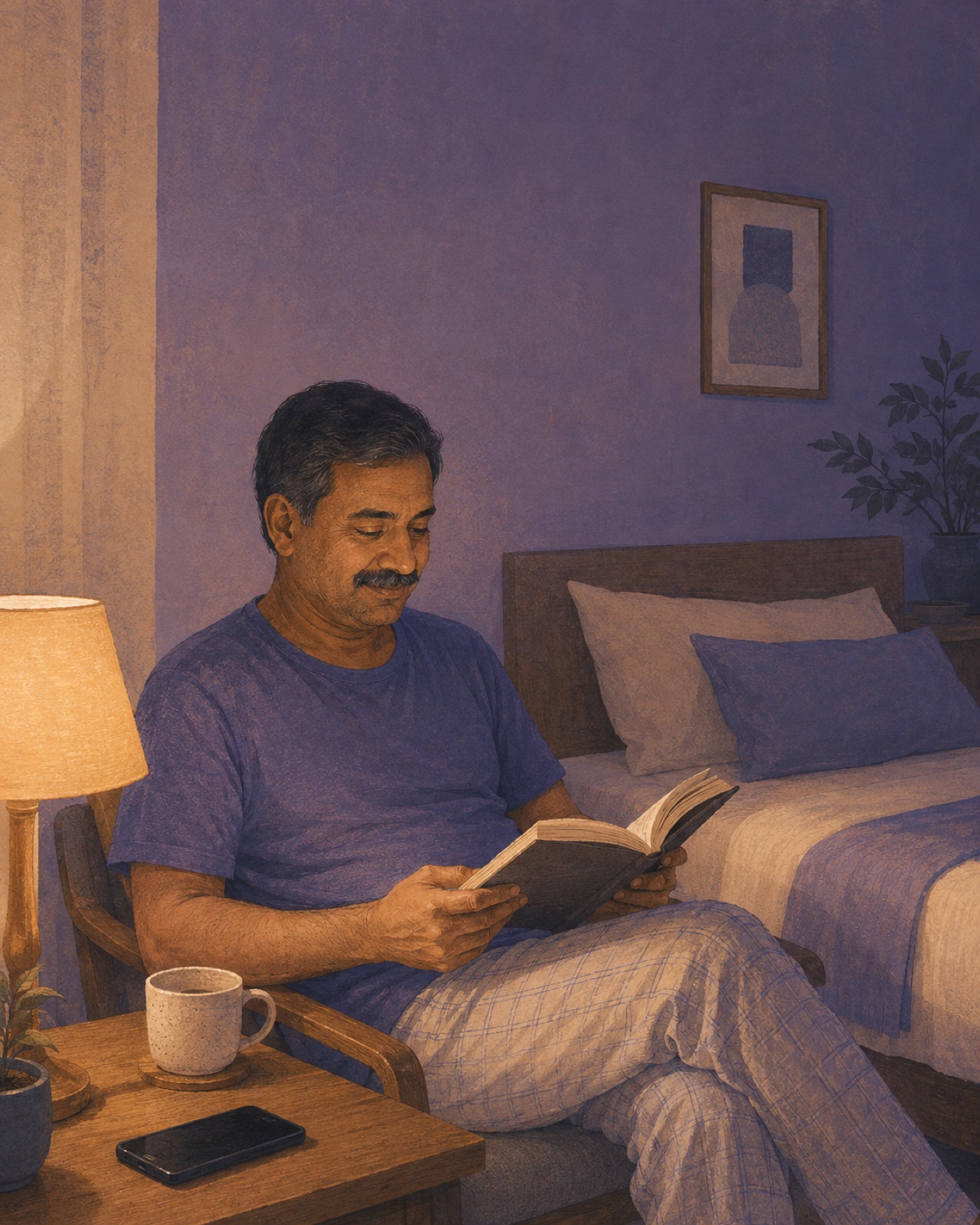
Imran is 44 and drives long shifts in Hubli. For months his mind only seemed to switch on once he lay down, replaying the day while the hours slipped past. What changed was small and unglamorous. He stopped trying to force sleep, set a steady wind-down before bed, kept his wake-up time fixed even after bad nights, and got up to sit quietly when sleep would not come instead of lying there fighting it. The first weeks were uneven. But slowly the bed stopped feeling like a battleground, and sleep started arriving on its own again.
More, if you want it
Medicine can be part of the help, used carefully. For some people a doctor may offer a short course of sleep medicine to get through a rough patch, weighed with you against the benefits and the downsides. It is generally meant for the short term, not as a nightly habit for months, because the lasting fix comes from the habits, not the tablet. It is a tool to discuss with a doctor, not a thing to be ashamed of and not a thing to start on your own.
- A steady routine: same wake-up time, daylight, regular hours.
- A calm wind-down that tells the body night is near.
- Keeping the bed for sleep, getting up when sleep will not come.
- A doctor's help, including short-term medicine if it is needed.
Remember
Better sleep is not all-or-nothing, and one bad night does not undo your progress. The skill is to keep the same steady habits, take the pressure off sleep, and let the good nights add up, even when last night was rough. Steady and gentle beats forcing it.
When sleep trouble is a signal
When poor sleep lasts most nights for weeks, when it wears down your days, your mood, or your work, or when it comes alongside low mood, heavy worry, or a health problem, that is a signal to reach out, not to push through alone. Treatment works, and reaching out early gives the best chance.
A run of bad nights is part of every life. It is worth getting help when poor sleep settles in and starts running your days, most nights for weeks, with tiredness, low mood, or trouble coping that follows you around. Sometimes insomnia is its own problem. Just as often it travels with something else, low mood, anxiety, pain, or another health condition, each one feeding the other.
Help is real and it works. A doctor or counsellor can look at the whole picture, treat the sleep, and check whether something underneath needs care too, and the earlier you reach out, the better the odds. You do not have to reach some breaking point first to deserve help. If sleepless nights ever come with thoughts that life is not worth living, please treat that as a reason to reach out now, not to push through alone.
If the nights get dark
If you ever lie awake with thoughts of harming yourself, or that life is not worth living, please reach out right away. You do not have to carry that alone, and it can get better with help. You can call Tele-MANAS, the free national helpline, on 14416, any time, day or night. The crisis card linked below has more people you can reach.
Write down one question you would want to ask a doctor about your sleep, and keep it on your phone. Something like "I am in bed eight hours but only sleep four, what can help?" Having the question ready makes the first visit far easier, and the first visit is the hard one.
Your nights can come back
Insomnia is something you are going through, not who you are. For most people sleep comes back with the right habits and support. A run of bad weeks can return now and then, and that is part of the road for many people, not a failure. The frustration and shame around it are the heaviest and least useful part.

The hardest part for many people is not the tiredness itself. It is the quiet belief that not being able to sleep makes them weak, a failure, or somehow broken. That belief is understandable, and it is wrong. Insomnia is a common health problem you are working through, not a verdict on your strength or your worth, and rest is something your body is built to find again.
Sleep returns slowly and usually plainly. Most people who use the proven habits and get help do sleep better, and many sleep well again. For some, a stretch of bad nights comes back later, in a stressful month or a hard season, and that too is part of the picture, not proof you have failed. A bad week is a setback to ride out with your habits, not the end of the road. In many Indian families sleep trouble is brushed off as nothing, or carried in silence, and that silence falls heaviest on the person lying awake. The silence is not the truth about you.
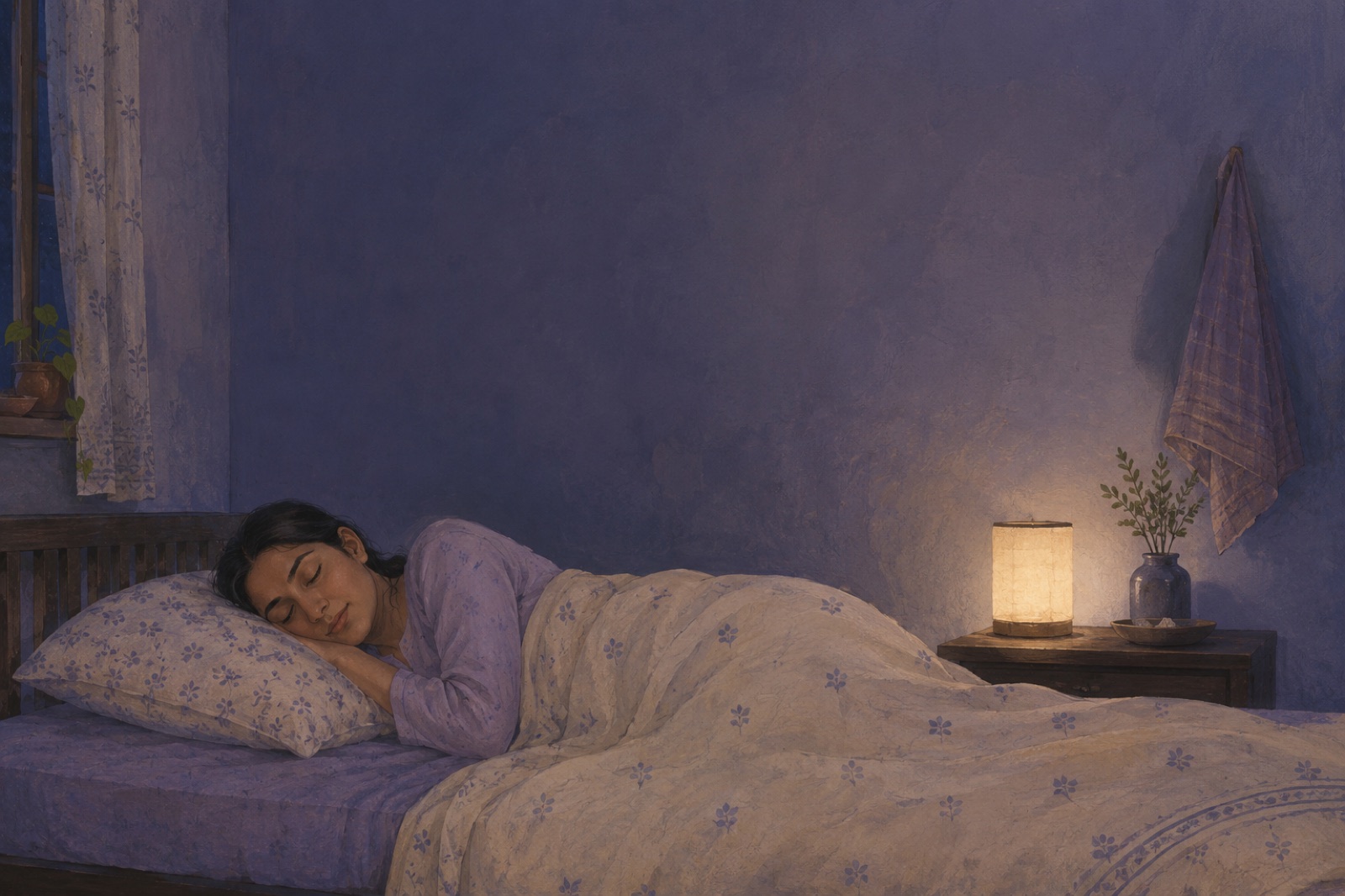
The same body that learned to lie awake can, with steady habits and time, learn to rest again. It rarely happens in one perfect night, and almost always in many ordinary, gradually quieter ones.
More, if you want it
Keep the habits that helped, forgive the nights that did not go to plan, and start again gently. Picking the routine back up after a bad week is not starting over. It is the work itself, and it is how most real recovery actually looks. Steady nights come back not in one perfect sleep but in many ordinary ones, most of them quiet, many of them helped by getting the conditions right.
In your corner
If a sleepless night ever brings thoughts that life is not worth living, please reach out, not push through alone. You can call Tele-MANAS, the free national helpline, on 14416, any time, day or night. The crisis card below has more people you can reach.
Tonight, set up one small thing for tomorrow's sleep, a fixed wake-up time or screens off before bed. Keep it for a week, and watch what it does to your nights.
Where this comes from
This guide helps you recognise and understand. It is not a diagnosis. For that, see a professional.