Stigma and Society
How we see mental illnessA community that makes room
A warm, plain guide for neighbours and community or faith leaders: why meeting a real person melts fear faster than any lecture, and the small acts of welcome that make room.
The hurt that happens outside the hospital
When someone in the neighbourhood has a mental illness, the way the rest of us treat them can wound as deeply as the illness itself. How a community behaves, not just what a doctor does, decides whether that person gets to live an ordinary life among us.
We often think mental illness is a matter for hospitals and doctors, something that happens behind closed doors. But so much of what makes it hard to live with happens right here, on our own street. The dropped voice when a name comes up. The party that stops including a whole family. The quiet decision not to let a son marry into that house. None of that is medicine. All of it is us.
Research that has looked closely at this finds that the everyday judgement of neighbours, friends and the wider community can hurt a person as much as, sometimes more than, the illness they carry. The stigma on the street shapes a life as surely as anything that happens in a clinic.
This little guide is for the ordinary neighbour and the community or faith leader who wants to help and is not sure how. You do not need to be an expert. You only need to be willing to make a little room.
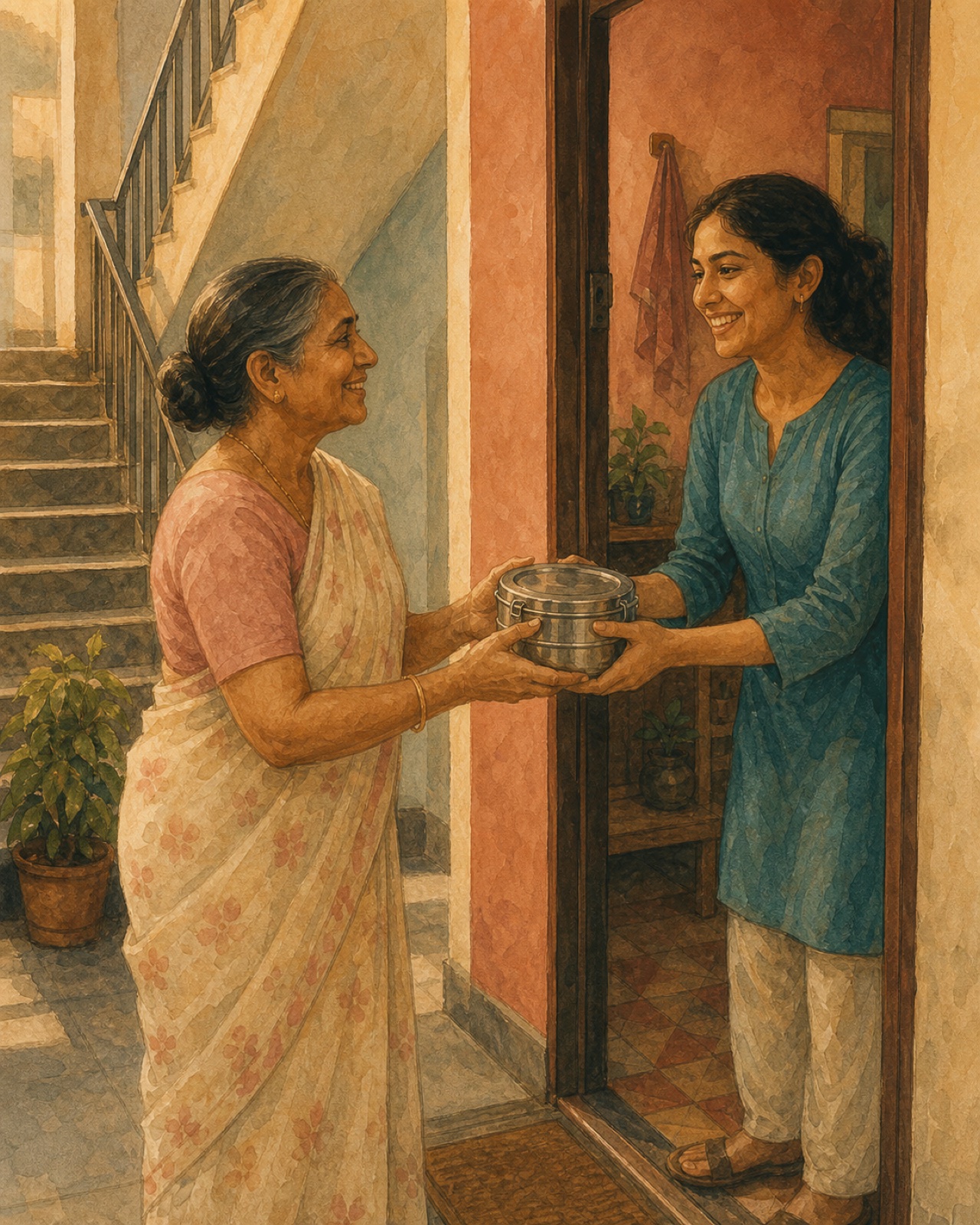
Think of the family on your lane that people have started to whisper about. Someone there has not been well. The visits have thinned. The invitations have stopped. When they pass, eyes drop and voices lower. Nobody has been cruel exactly, and yet a wall has gone up, brick by quiet brick, made of nothing but avoidance.
That wall is stigma, and it does real damage. It is also something any one of us can start to take down, not with a grand gesture but with an ordinary one: a greeting held a second longer, a cup of chai offered, a name spoken warmly in a room where others have gone quiet.
Bring to mind one person or family in your area that people have started to keep at a distance. This week, offer one small, ordinary kindness, a hello, a cup of chai, a moment of normal conversation. Not to fix anything. Just to keep them part of the street.
What mental illness is, and is not
Mental illness is a health condition, not a weakness, a curse, or a punishment. It is not caused by bad character, and it does not make a person dangerous or beyond reach. Most of what we fear about it is simply not true.
A lot of our fear comes from old ideas that were never right. That mental illness is a sign of weak willpower. That it is caused by some sin or by a family's wrongdoing. That such a person can never work, never marry, never be trusted, and is best kept apart. These beliefs are common, and they are wrong.
Mental illness is a health condition, like many others, that affects how a person thinks, feels or copes for a while. It has real causes and real help. A person living with one is still a whole person: a daughter, a colleague, a friend, a neighbour who takes the same bus and worries about the same bills. The illness is one part of a life, never the whole of it.
It is not weakness.
A mental illness is a health condition, not a failure of character or willpower. Nobody chooses it, just as nobody chooses diabetes.
It is not a curse.
It is not punishment for sin or something a family brought on itself. It has real causes and real treatment.
It does not mean danger.
The vast majority of people with a mental illness are far more likely to be hurt than to hurt anyone. Fear here is misplaced.
It is not the end.
People get better. With support they work, study, marry and raise families. Recovery is the rule, not the exception.
Naming a diagnosis is a doctor's job, not a neighbour's, and this guide will never hand anyone a label. The point is simpler. When we swap the old fears for the plain truth, the person in front of us stops looking like a problem to avoid and starts looking like someone we can stand beside.
More, if you want it
You do not have to memorise a list of conditions or become half a doctor. The most useful thing a community can learn is not the name of every illness but a single habit of mind: when someone is struggling, assume a real health reason and a real person, not a moral failing. That one shift changes how a whole street behaves.
The next time you hear someone explain a person's mental illness as weakness, drama, or a curse, you do not have to argue or lecture. Just offer one calm, human line: "I heard they have not been well. It is a health thing, and they are getting help." Said kindly, that quietly resets the room.
Real people, real recovery
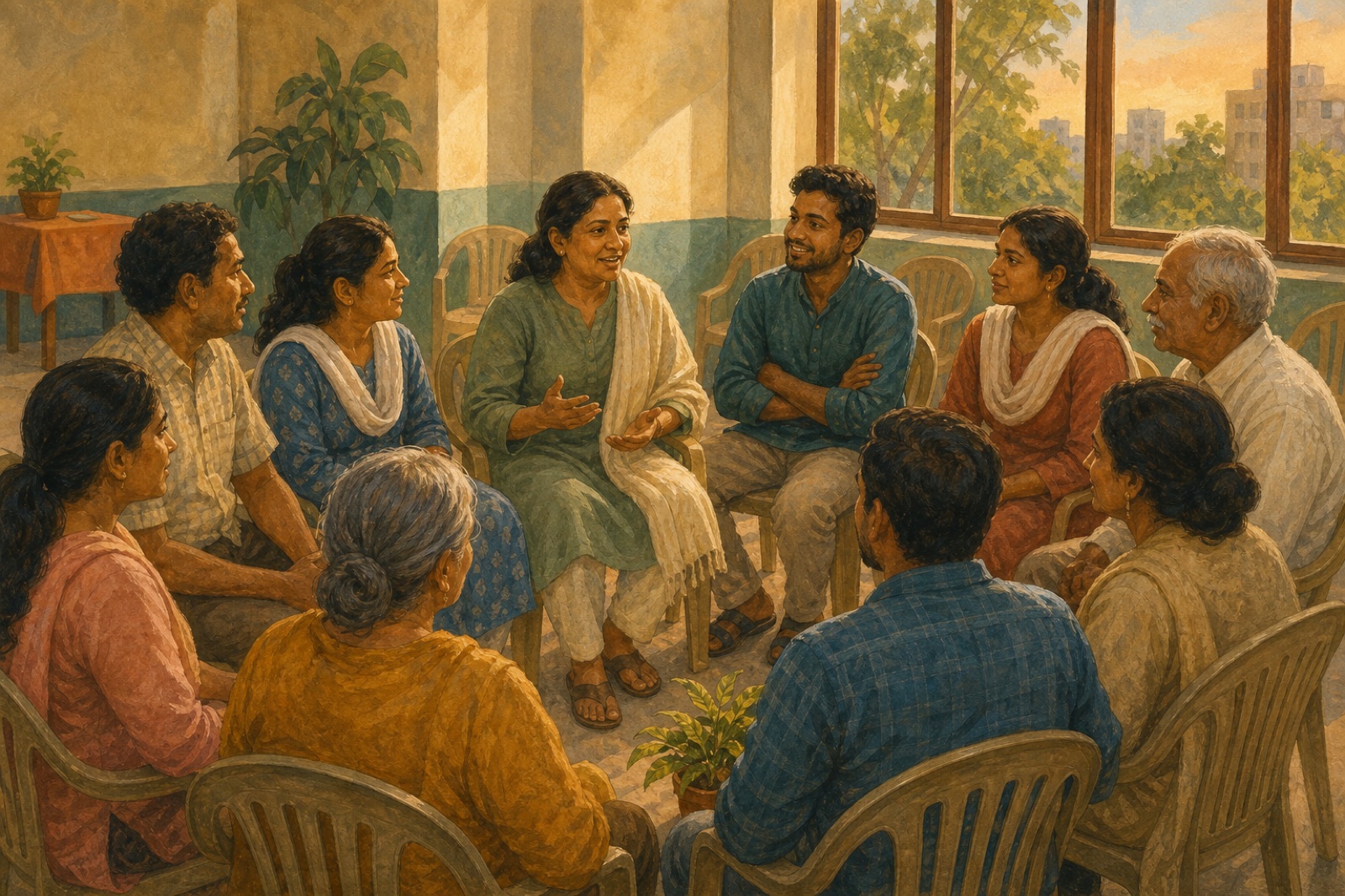
The single most powerful thing that changes how we see mental illness is meeting a real person who has lived through it. Getting to know them, face to face, does more to melt fear than any lecture or leaflet ever could.
Here is the part that matters most, and it is hopeful. Recovery is real. Across many long studies that followed people for years, a meaningful share of those with even serious mental illness got well enough over time to work, to connect with others, and to rebuild an ordinary life. The right response from a community is not to write someone off, but to expect them back.
And there is something simple that shifts our fear faster than anything else. When ordinary people just meet and get to know someone who has lived with a mental illness, face to face, as a real person and not a case, their fear and prejudice go down. This personal contact works better than any lecture or leaflet on its own. Knowing one real person changes more minds than a hundred good arguments.
I used to cross the road. Then we got talking at the tap, week after week, and one day I realised I was talking to a friend, not a diagnosis.
a neighbour, after
This is why the stories of people who have come through matter so much, and why welcome is not charity but repair. Every time a person who has been unwell is invited back into ordinary life, the daily chai, the shared festival, the small talk at the shop, two things heal at once: their sense of belonging, and the street's fear of them.
Remember
The people who best teach a community not to be afraid are the ones who have lived through mental illness themselves. Recovery is common, and a person who has come through it is not a warning to others. They are the proof that things get better.
If you know someone who has lived with a mental illness and come through it, and they are willing, make a little space for their ordinary presence, at the tea stall, the meeting, the celebration. You are not asking them to perform their story. Just letting the street see a real person living a real life.
What a neighbour can do
You do not need training or the right words. Small, steady, ordinary acts, a greeting, an included invitation, a gossip left unspoken, do more good than any single big gesture. Acceptance is built out of little things.
The good news is that helping does not take expertise. It takes ordinary decency, offered steadily. Most of what heals a neighbourhood is small: keeping someone on the invitation list, saying hello as you always did, letting a piece of gossip die in your hands instead of passing it on.
There is a real reason this matters beyond kindness. Fear of being judged is one of the main things that stops people from getting help in the first place. A street that quietly accepts people, instead of talking about them, actually makes it easier for someone to reach a doctor sooner. Your ordinary acceptance can be the thing that gets someone to care in time.
- Greet them as you always did. Do not let illness change your hello.
- Keep them on the list. Weddings, festivals, small gatherings, still invite.
- Let gossip stop with you. Do not carry the whisper any further.
- Offer, do not pry. A cup of chai and a normal chat beats a hundred questions.
None of this asks you to be a counsellor. If someone shares that they are struggling, you do not need clever advice. You listen, you stay warm, and if things sound serious, you gently point toward help: a doctor, a trusted clinic, or a helpline. Being a steady presence is enough. The rest is for professionals.
More, if you want it
It helps to know what not to do as much as what to do. Do not offer a diagnosis or tell someone what they "have", that is for a doctor. Do not push them to snap out of it or count their blessings. Do not treat them as fragile or as a project. Just keep them ordinary: same greeting, same seat at the gathering, same place on your street. Ordinary is the gift.
Pick one thing from the four moves above and do it this week. Keep one person on an invitation list. Let one piece of gossip stop with you. Say one warm hello you might have skipped. One small act, done for real, is worth more than a hundred good intentions.
What a faith or community leader can do
People trust their faith and community leaders deeply. A leader who chooses to stand beside a struggling family, and to point them toward help rather than blame, becomes one of the most powerful allies a person's recovery can have.
In many of our communities, the pujari, the imam, the pastor, the elder, the head of the association, carries a weight of trust that no doctor and no leaflet can match. What such a leader says about mental illness travels far and settles deep. That is a great responsibility, and a great chance to help.
When faith and community leaders partner with mental health workers, offering support, encouragement and a gentle push toward care rather than blame, it helps reduce stigma, spread understanding, and connect people to the help they need. The most powerful thing a leader can offer a struggling family is not an explanation of why this happened, but the steady message that they are still welcome, still valued, and not alone.
An ally, not a cure
Faith can be a deep source of comfort and belonging through a hard time, and that comfort is real and worth honouring. Alongside it, gentle guidance toward a doctor is not a lack of faith. It is care working hand in hand with belief. The kindest message a trusted leader can send is: keep praying if it helps you, and let us also get you to someone who can treat this.
A leader does not need clinical knowledge to be a powerful ally. They need only to model, in front of everyone, the welcome they want the whole community to show: to greet the family warmly, to name mental illness plainly as a health matter and not a curse, and to make it normal to seek a doctor's help.
More, if you want it
Small acts from a trusted leader carry enormous weight. A word of welcome to a family others have avoided. A quiet reminder that judging a struggling person is not what our faith asks of us. A visible friendship with someone who has been unwell. A gentle steer toward a clinic or helpline when a family is lost. None of it requires expertise, and all of it gives permission for the whole community to be kinder.
If people look to you, choose one message to say plainly and in public this week: that mental illness is a health matter, that seeking a doctor is wise and welcome, and that a struggling family still belongs among us. Say it once, warmly, where others can hear. Then let them watch you live it.
Building a community that makes room
Making room is not a one-day event. The warmth from meeting and including people fades if it is not renewed, so a community keeps its kindness alive by staying in touch, again and again, not through a single festival or speech.
If there is one thing to hold on to, it is this: welcome has to become a habit, not a moment. The research is honest about it. The good that comes from meeting and including people is clearest in the short term and fades if it is not kept up. A community stays warm not through one grand festival or one moving speech, but by staying in ordinary contact, over and over. Acceptance is not a day we mark. It is a habit we keep.
So the work of making room is quiet and ongoing. It is the greeting repeated next month and the month after. The family kept on the invitation list next year too. The gossip left to die every time it rises. The steady, unremarkable choice to keep treating a person as a person, long after the first burst of goodwill.
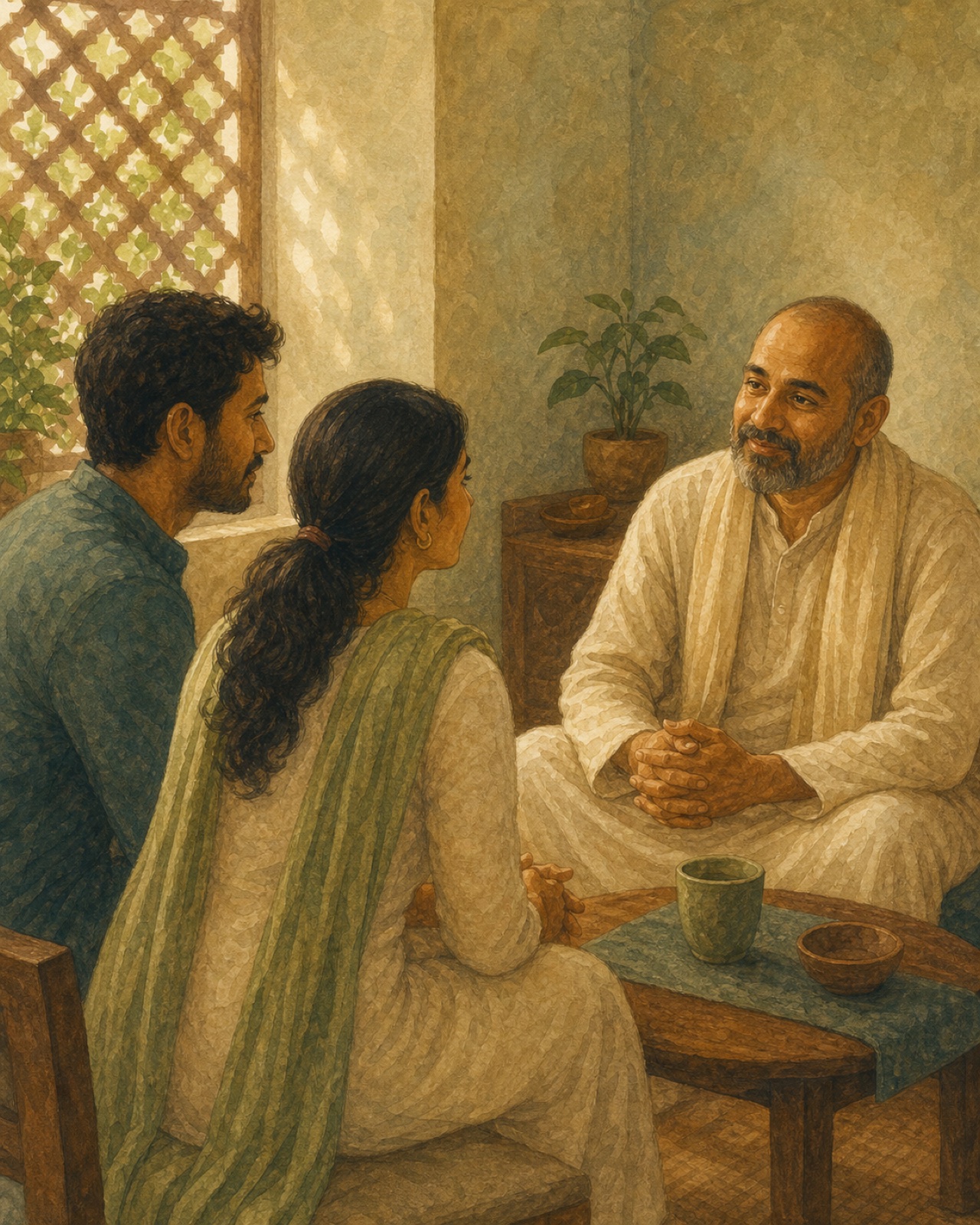
None of us can remake a whole society. But each of us shapes one street, one gathering, one gurudwara or church or masjid or temple hall. And a community that makes room is built exactly there, in the small and repeated choices of ordinary people who decided that the person struggling among them still belongs.
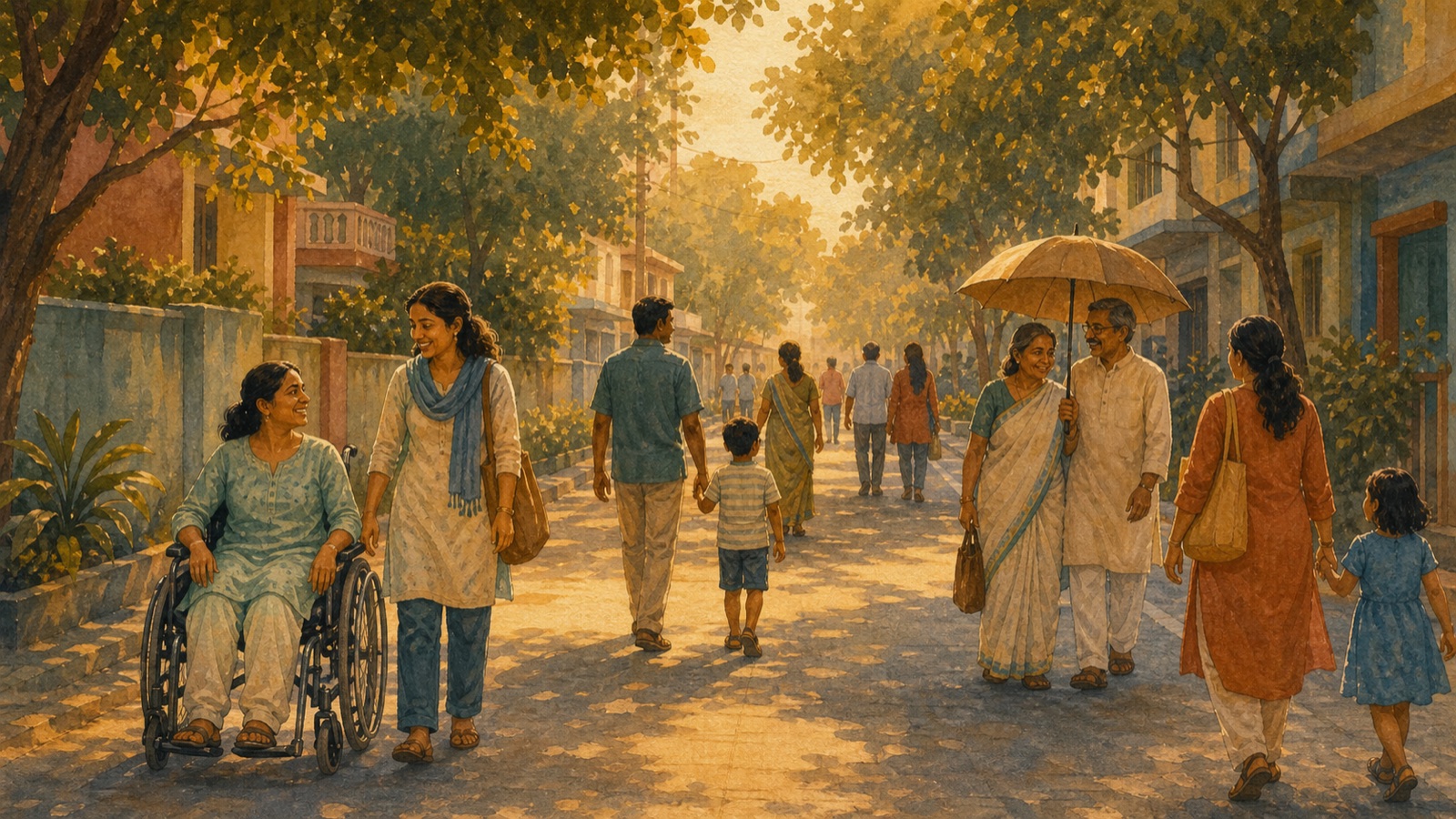
A street that keeps its door open, month after month, quietly becomes the safest place a struggling person can be.
Choose one act of welcome you can keep, not just do once. A monthly cup of chai. A standing invitation. A promise to yourself that gossip stops with you. Put it somewhere you will remember. A community that makes room is simply many people keeping small promises like this, again and again.
Where this comes from
Further reading
This guide helps you recognise and understand. It is not a diagnosis. For that, see a professional.